

Study content and requirements
for the Architecture Degree Program
What should you bring to the program?
To study architecture, you need, above all, curiosity, creativity, and a passion for designing living spaces. An interest in architecture, people, and social issues is just as important as a willingness to develop ideas further and work as part of a team.
The following are particularly helpful:
- An interest in architecture, design, and building culture
- Creativity and spatial awareness
- An appreciation for materials, craftsmanship, and construction
- Analytical and logical thinking skills
- Openness to interdisciplinary collaboration and new perspectives
Here's what you'll learn during your studies
In the Bachelor’s program in Architecture, you’ll develop creative, technical, and social skills to plan buildings and living spaces responsibly. From the initial idea through the design phase to the construction process, you’ll learn to think about architecture holistically and develop sustainable solutions for a variety of requirements.
- Design and Planning
You’ll develop architectural concepts and learn to translate ideas into designs—from initial sketches and models to compelling presentations. - Structural Engineering and Materials
You’ll explore structural engineering, structural design, materials science, and sustainable construction methods. In the process, you’ll learn to combine design quality with technical requirements. - Architecture in a Social Context
Architecture influences how people live, work, and interact. That’s why you’ll explore social housing, building culture, and the development of livable cities and rural regions. - Project-Based Work
In design studios, workshops, and interdisciplinary projects, you’ll work on real-world challenges and develop solutions together with students from other disciplines. - Communication and Collaboration
Architecture emerges through dialogue. You’ll learn to present your ideas clearly, develop projects as part of a team, and collaborate successfully with professionals from various disciplines.
Further Studies
After successfully completing your bachelor’s degree, you can further deepen your knowledge by pursuing a master’s degree in architecture at CU Carinthia University of Applied Sciences or a related master’s program at another university of applied sciences or university.
→ Details on the Master’s program in Architecture at CU Carinthia University of Applied Sciences
General Information About the Program
For more information on admission requirements, the training contract, nostrification and recognition, the admissions process, examination regulations and grading, ECTS credits, and the academic calendar, please refer to the General Study Information.
FAQ
Frequently asked questions about the Bachelor’s Program in
Architecture
Do I need to be good at drawing?
No. Creativity and spatial awareness are more important than perfect drawing skills. You'll develop the fundamentals of design and drawing step by step during your studies.
Do I need any prior knowledge of construction?
No. The program will provide you with the necessary fundamentals in design, materials science, and construction planning. An interest in architecture and a willingness to learn new things are the best prerequisites.
Can I start directly in the third semester?
Yes. Graduates of relevant technical high schools (HTLs) or vocational colleges can enter directly into the 3rd semester–provided they meet the requirements and successfully complete the admissions process. Individual courses may also be recognized on a case-by-case basis.
Current Courses
Current course - Architecture · Organisation form: Vollzeit
Modular Structure of the Architecture Program
How You'll Grow During Your Studies
The bachelor’s degree program in architecture spans six semesters and 180 ECTS credits. Step by step, you’ll develop creative, technical, and social skills–from the initial sketch to an independent architectural project. Practice-oriented studio courses, project work, and a professional internship will guide you throughout your studies.
Academic Year – Laying the Groundwork
You'll learn to think about architecture holistically. The program focuses on design, spatial planning, model-making, CAD, and the fundamentals of engineering and construction. At the same time, you'll develop an understanding of building culture, materials, and architectural contexts.
Academic Year – Developing Projects
You’ll deepen your knowledge and combine design with technology and sustainability. In interdisciplinary projects, you’ll explore topics such as building physics, structural engineering, building services engineering, and project management, and learn to develop architectural concepts in a holistic manner.
Academic Year – Gain Hands-On Experience
During your professional internship, you’ll gain valuable experience in the working world. Afterward, you’ll deepen your knowledge in areas such as urban and regional planning, land-use planning, and scientific research. The program culminates in your bachelor’s thesis, in which you’ll independently demonstrate your creative and technical skills.
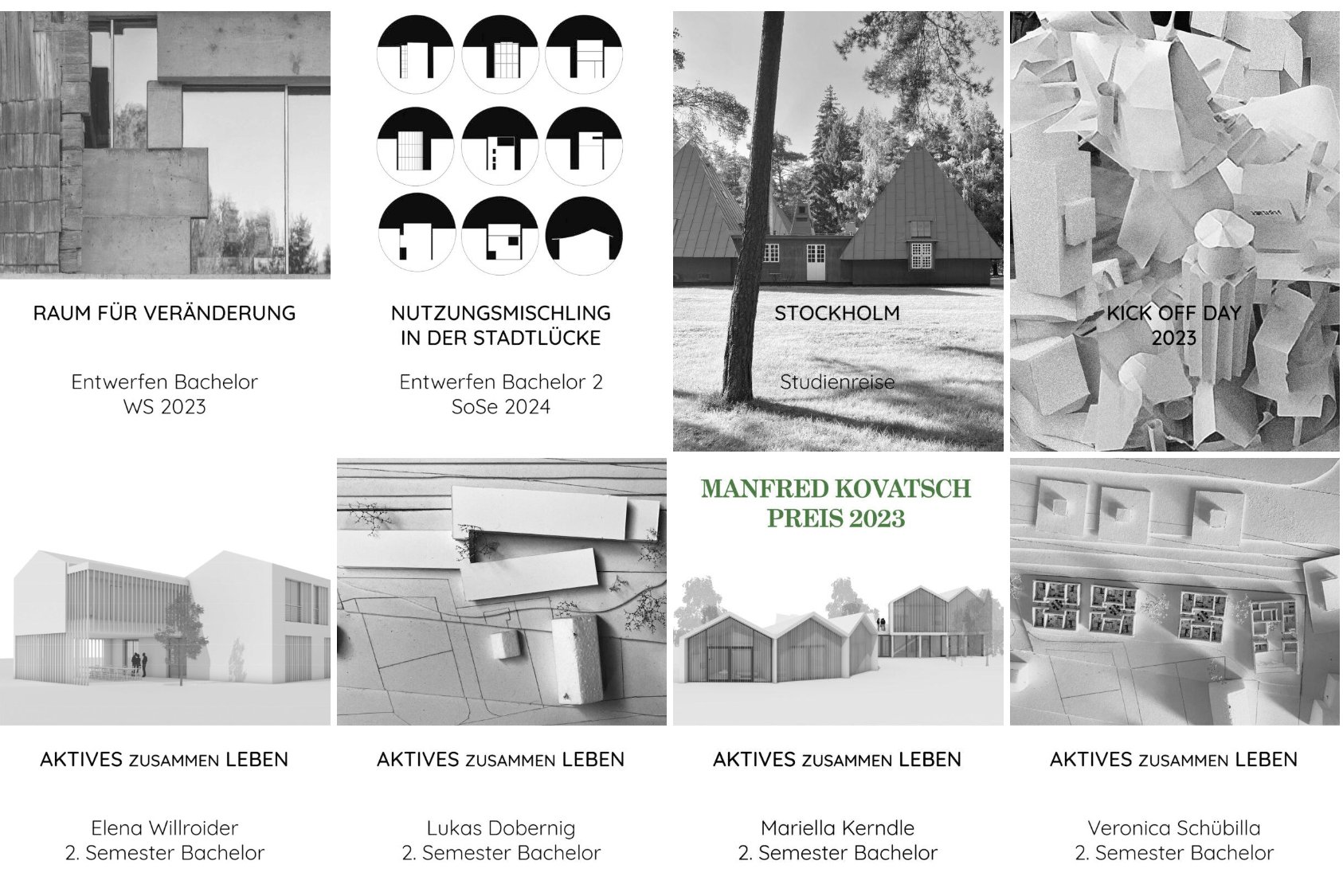
ARCHITECTURE PROJECT ROOM
The Architecture Program Blog
At CU Carinthia University of Applied Sciences, Spittal Campus, students in the Architecture program learn the fundamentals of changing the world.
On both a small and a large scale. Using methods that people employed hundreds of years ago. Or with highly complex technologies that hadn’t even been invented yet just yesterday. The worlds that students design are sometimes no wider than a park bench. Sometimes no bigger than a townhouse. And sometimes they are worlds where schools don’t even have roofs anymore.
Awards
This list contains no blog posts.
Are you ready to design living spaces responsibly?
Then create architecture that brings people together and has a lasting impact.
Jobs & Careers
After Graduating with a Degree in Architecture
Designing Architecture – Diverse Perspectives
Architects design buildings, cities, and living spaces. They combine creativity with technical expertise to develop solutions that are functional, sustainable, and socially relevant. The bachelor’s program equips you with the creative, technical, and social skills needed to work in architecture and planning firms, construction companies, or the public sector. At the same time, it lays the foundation for further specialization in a master’s program.
These career paths are open to you
- Architecture and Planning Firms
- Property and Project Development
- Construction Management and Supervision
- Construction management
- Urban and Regional Planning
- Public Administration
- Research and Development
- Construction Process Support and Facilitation
The Path to the Civil Engineer Examination
The bachelor’s degree lays the foundation for further study in the master’s program in architecture. Upon successful completion of the Master’s degree, you will meet the same requirements for admission to the civil engineer examination as graduates of university architecture programs, in accordance with the EU Professional Qualifications Directive. This opens up a wide range of career opportunities for you in Austria and throughout Europe.