

From Floristry to Managing Social Service Organizations
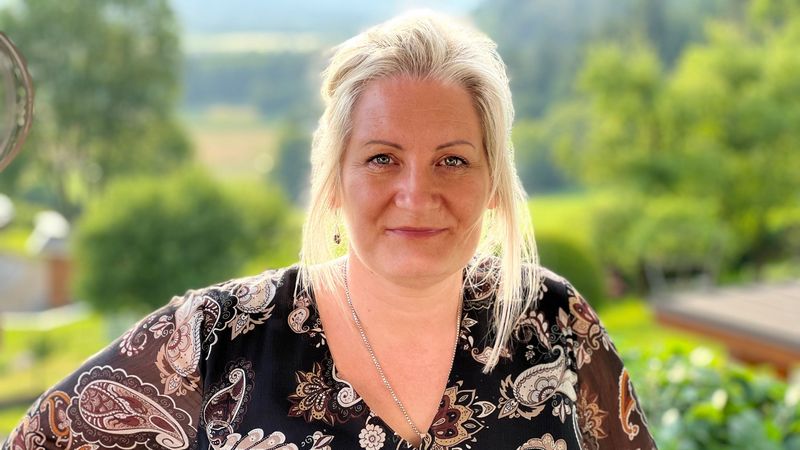
Marina Jellitsch, Graduate of the Bachelor’s Program in Disability & Diversity Studies
Since working with people with disabilities had already been a long-standing focus of my professional life at that point, I hoped that the Program would provide me with academic and scholarly expertise to complement my previous practice-oriented training. The professionalism and the broad network also opened my eyes to new perspectives and paths.
Marina Jellitsch originally came from the floristry industry. Seeking financial security, she briefly moved into the manufacturing sector, where, however, she did not feel professionally fulfilled.
After taking a home care assistant training course to get a taste of the social services sector, it became clear to her – “That was the key.” One part-time vocational training program followed another, during which she worked on advancing her career. “The creative aspects of my work as a florist now carried over into creative work with people with disabilities in the workshops, and my growing confidence led to increasingly broader areas of responsibility,” she explains.
After completing her training as a nursing assistant, she secured a position at Lebenshilfe Kärnten. She then earned a Degree as a certified social worker at the SOB. This Degree was not only a journey of personal development but also her gateway to higher education.
Marina ended up studying Disability & Diversity Studies (DDS) at CU Carinthia University of Applied Sciences purely by chance. She was already enrolled in the preparatory course and had intended to enroll in a different Program, but based on recommendations from other participants, she chose DDS. Without hesitation, she applied and was able to join the Bachelor’s Program with a delay of just under a month. She also found the diversity in her class – across ages and life stages – to be very positive. During her studies, her self-confidence grew, and she was able to channel this into her professional life to great advantage.
Today, Marina manages two social service organizations and is responsible for their development and day-to-day operations. As team leader at the “hi Harbach” community workshop, she now works in the traditional field of disability services. In addition, since February she has been setting up the “gernda” bistro, a social integration restaurant where up to eight people with disabilities are receiving their first jobs in the open labor market.
Marina encountered challenges in interacting with people with disabilities at an early age. Her brother has Down Syndrome, which is why addressing this issue is a matter close to her heart. “I’m doing my part to counteract the challenges my brother has faced since childhood. For me, this brings things full circle,” says Marina.
When asked if she would recommend the Program, she replies: “I can recommend the DDS Program because it equips students with a high level of practical expertise; it is a lifelong learning journey that critically and reflectively examines the various spheres of life, encourages critical and self-directed thinking, builds self-confidence and presentation skills, and offers a wide range of ways to deconstruct barriers in people’s minds and in reality.”
Marina has always found balance in her garden, especially during lockdowns. “I’ve always felt blessed to live in a house with a garden that grounds me through the earth but also offers me space for creative expression,” she explains.