

Client-Centered Evidence-Based Healthcare MSc
Master's Program
The part-time master’s degree program in Client-Centered Evidence-Based Health Care (EBGV) at CU Carinthia University of Applied Sciences provides the ideal foundation for actively shaping health care and deepening one’s expertise in a scientifically grounded manner.
Over the course of four semesters, students develop comprehensive competencies for a healthcare system that is consistently oriented toward clients’ needs while also being grounded in current scientific evidence.
The program equips students with the ability to critically evaluate research findings, apply them to professional practice, and systematically refine care processes. Key areas of focus include quality improvement, health policy, communication, and ethics, as well as forward-looking topics such as digital health.
The program emphasizes the practical integration of science and professional practice. Projects, case studies, and research-based assignments enable students to apply their acquired knowledge to specific challenges in the healthcare system and to develop well-founded solutions for healthcare practice.
Thanks to its part-time format, the program can be easily balanced with work and daily life. It thus provides a solid foundation for demanding specialized and leadership roles in the healthcare sector.
How are clients involved?
In shared decision-making, you actively involve clients in health-related decision-making processes. This ensures that their individual perspectives are systematically taken into account when making joint decisions.
What does “client-centered” and “evidence-based” mean?
You combine scientific evidence and professional expertise with the values, needs, and preferences of clients. This enables you to make well-informed decisions that are consistently people-centered.
What fields with a promising future await you?
In the Digital Health and Health Data Analytics program, you'll work with health data and digital technologies. You'll learn how to use them effectively to improve healthcare.
Actively shaping client-centered and evidence-based health care.
Together, we question, improve, and take effective action.
Special features of the program
Translating Research into Practical Solutions
You will critically evaluate research data, design your own research projects, and translate the results into practical recommendations for action. Practical projects, case studies, and research assignments will help you develop innovative solutions to specific challenges in healthcare delivery.
Addressing Health Issues Through an Interprofessional Approach
You will analyze complex issues from various professional perspectives and strengthen your skills in interprofessional collaboration. At the same time, you will learn to lead teams and work together to provide quality-assured care.
Responsibly Improving the Quality of Care
You will deepen your knowledge of quality management, health policy, communication, and ethics. This will enable you to design quality assurance processes, make ethically responsible decisions, and contribute to clinical guidelines. You will reflect on your professional development in the spirit of lifelong learning.
Flexible & Independent Learning
Intensive courses, online instruction, and hybrid formats help students balance their work and family lives. Blended learning and the flipped classroom promote independent thinking and connect theoretical foundations with the demands of professional practice.

Details about the program




Info Box
Level of qualification
Master
ECTS credits
120
Tuition fees*
€ 363.36 / Semester
ÖH (Austrian Student Union) fee
€ 26.20 / Semester
Qualification awarded
Master of Science in Health Studies
Duration of study
4 Semester
Language of instruction
German/English
CU Campus
Klagenfurt
Dates Info Box
Winterterm 2026
Period I: 01.11.-15.03.26
Period II: 16.03.-15.05.26
Period III: 16.05.-15.07.26
Due to lengthy visa processes, applications from Africa, the Middle East and South, East, and Southeast Asia only in Period I.
Winter semester starts in the second half of September 2026.
Online classes every Tuesday, from 16:00 - 20:00 / 17:00 - 21:15 and Saturday, 08:00 - 12:00
One week on-site at the start of the semester, between semesters and at the end of the summer semester (Monday to Saturday, 08:00 - 17:00)
One weekend per semester on-site (Wednesday, from 14:00 and Thursday to Saturday, 08:00 - 17:15)
An overview on our upcoming events can be found here.
You are interested in a personal (online) study consultation or would like to receive more information on the degree program? Click on the buttons below this checkbox to learn more.
Language of Instruction: German (min B2)
Application essentials:
More information on the application process, admission requirements and necessary documents can be found here.
* Tuition for non-EU/EEA citizens: €500 + €26.20 ÖH fee (per semester)
FAQ
Frequently asked questions about the Master’s Degree Program in
“Client-Centered, Evidence-Based Health Care”
Who is this master's program intended for?
The master's program is designed for healthcare professionals with work experience and relevant prior education who wish to expand their skills in client-centered and evidence-based healthcare and actively contribute to the further development of the healthcare system.
What admission requirements do I need to meet?
Applicants must have relevant prior education in the health care field, a valid professional license, and relevant work experience. Graduates of relevant bachelor’s degree programs and individuals with equivalent qualifications are eligible to apply.
Can I complete the master's program while working?
Yes. The program is specifically designed for working professionals and spans four semesters. In-person sessions are combined with online instruction, making it easy to balance your studies, career, and personal life.
Book an online information session
During the online information sessions, the program directors or academic directors provide detailed information about the program. Topics include course content, internships, admission requirements, and potential career prospects.

Angelika Mitterbacher, MSc, MEd, Professor at the University of Applied Sciences
Vice Rector, Program Director
+43 5 90500 3560
a.mitterbacher(at)cuas.at
INFORMATION & APPLICATION
Virtual Campus Tour
Contact
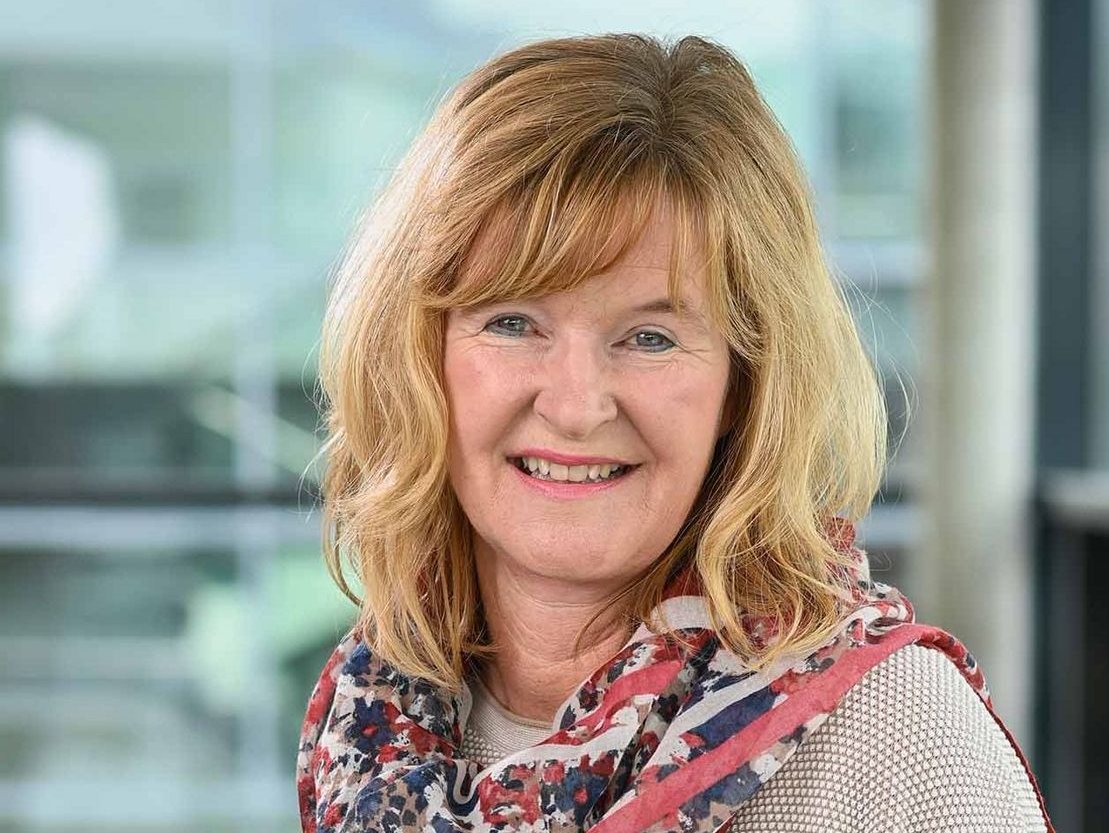
Brigitte Pintar, BA, M.Ed.
Program
Administration +43 5 90500 4101
b.pintar(at)cuas.at
On foot
From Klagenfurt Central Station, you can reach the campus in about 20 minutes on foot (1.7 km). The route takes you east along Bahnstraße and then along Gerberweg to the campus.
By public transportation
From Klagenfurt Central Station, take Line A to the “FH Kärnten” stop operated by Stadtwerke Klagenfurt. From the station building, turn left toward the bus station.
By car
Coming from the west—for example, via the A10 Tauern Autobahn or A11 Karawanken Autobahn—take the A2 Südautobahn to the Klagenfurt/Wörthersee exit. Then follow the Südring for about 7 km and turn toward the city center at the Südring/Gerberweg intersection. After about 150 m, turn right toward the campus.
If you’re coming from the east, take the Klagenfurt-Ost exit on the A2 Südautobahn. Then drive toward Klagenfurt-Zentrum, continue along Völkermarkter Straße, and then turn left onto the Südring. At the Südring/Gerberweg intersection, turn toward the city center and, after about 150 m, turn right toward the campus.
Coming from the south, you can reach the campus via the B91 Rosentaler Straße. At the Rosentaler Straße/Südring intersection, turn onto the Südring and follow it for about 2.5 km to the Südring/Gerberweg intersection. There, turn toward the city center and, after about 150 m, turn right toward the campus.
Coming from the north, drive toward the city center on the B83 St. Veiter Straße until you reach the St. Veiter Straße/St. Veiter Ring intersection. Then follow St. Veiter Ring, then Völkermarkter Ring, and continue on Lastenstraße until you reach Gerberweg. After about 750 m, turn left toward the campus.
By Plane
There are several airports in the area to choose from:
- Klagenfurt: approx. 15-minute drive
- Ljubljana (Slovenia): approx. 1 hour 10 minutes by car
- Graz: about 1 hour and 30 minutes by car
- Salzburg: approx. 2 hours and 30 minutes by car
- Trieste and Venice (Italy): approx. 2 to 3 hours’ drive
- Vienna: approx. 3 hours 30 minutes drive
- Munich: approx. 4 hours 15 minutes travel time
The rest of the journey to the Klagenfurt Primoschgasse campus can then be completed by train, bus, taxi, or car.