

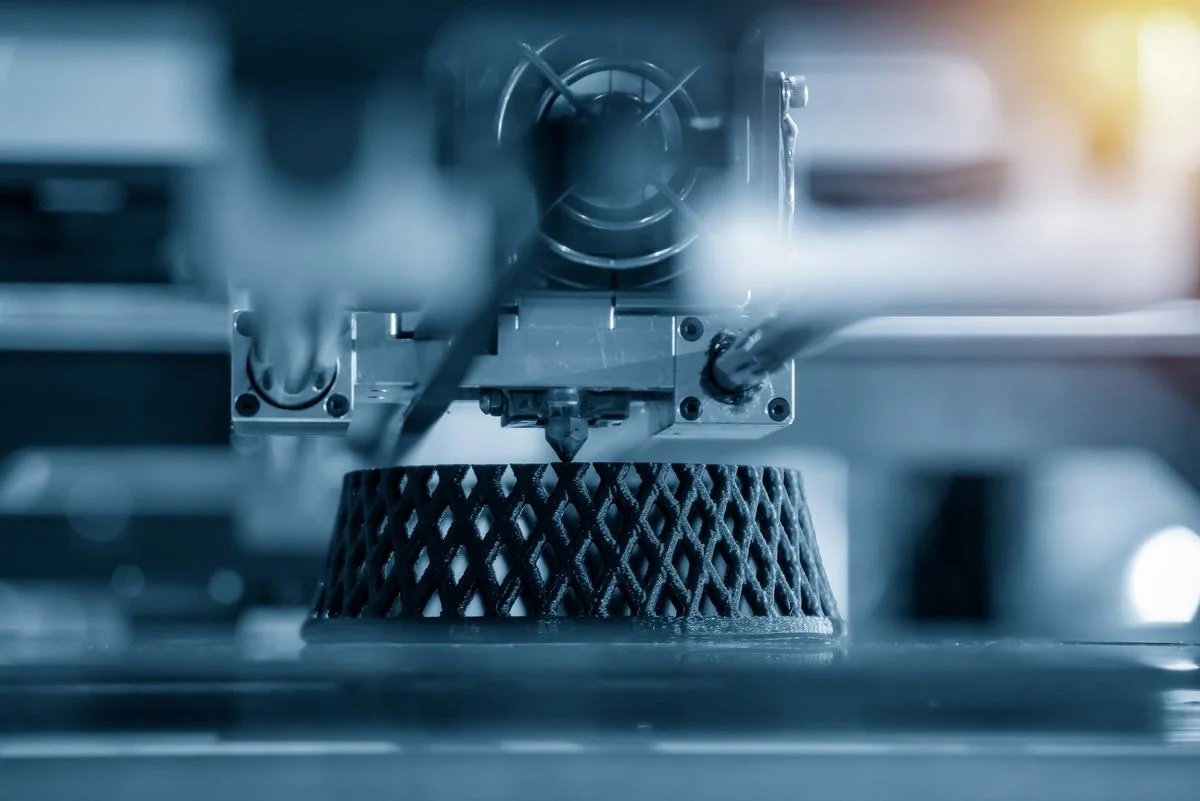
Filament-Based 3D Printing - MC


With the "Filament-Based 3D Printing" Micro Credential, you’ll gain hands-on experience in additive manufacturing with plastic. You’ll gain a thorough overview of suitable materials, different types of printers and key printing parameters. You’ll also learn about maintenance and troubleshooting, as well as the basics of CAD design and 3D scanning.
In project-based exercises, you’ll apply your knowledge directly. You’ll learn to design simple geometries, digitize objects using 3D scanning techniques and independently bring your own ideas to life with a filament 3D printer. In the process, you’ll select suitable materials, printing technologies and design methods for various applications.
The course combines theoretical fundamentals with hands-on practical sessions. Together with other participants, you’ll create print samples and develop your own project. On the final day, you will present and discuss your project, receive feedback from experts and exchange peer feedback. Insights from the perspective of industrial users will complement the practical learning experience.
Upon completion, you’ll be able to apply filament-based 3D printing independently and purposefully. You’ll be able to critically assess the potential and limitations of the technology and leverage its advantages for various applications - from custom one-off pieces to small-batch production.
Watch your ideas take shape, layer by layer.
Hone your skills in design, 3D scanning and practical implementation through the MC Filament-Based 3D Printing.
Info Box
Level of qualification
Academic Short Program
ECTS credits
1.5
Tuition fees
€ 1,650
ÖH (Austrian Student Union) fee
€ 26.20 / Semester
Info Box
Qualification awarded
Micro Credential - Certificate
Duration of study
4 days, 8 teaching units per day
Language of instruction
German
Location
Private Higher Technical School of Lienz (Linker Iselweg 22, 9900 Lienz)
Dates Infobox
14.01.2027
28.01.2027
11.02.2027
25.02.2027
There is 100% funding available for SMEs.
Employees from industrial companies with experience in R&D, engineering, or design.
For more information, please email us at f.smolnik(at)cuas.at.
Click here to apply.
What to expect from the Micro Credential
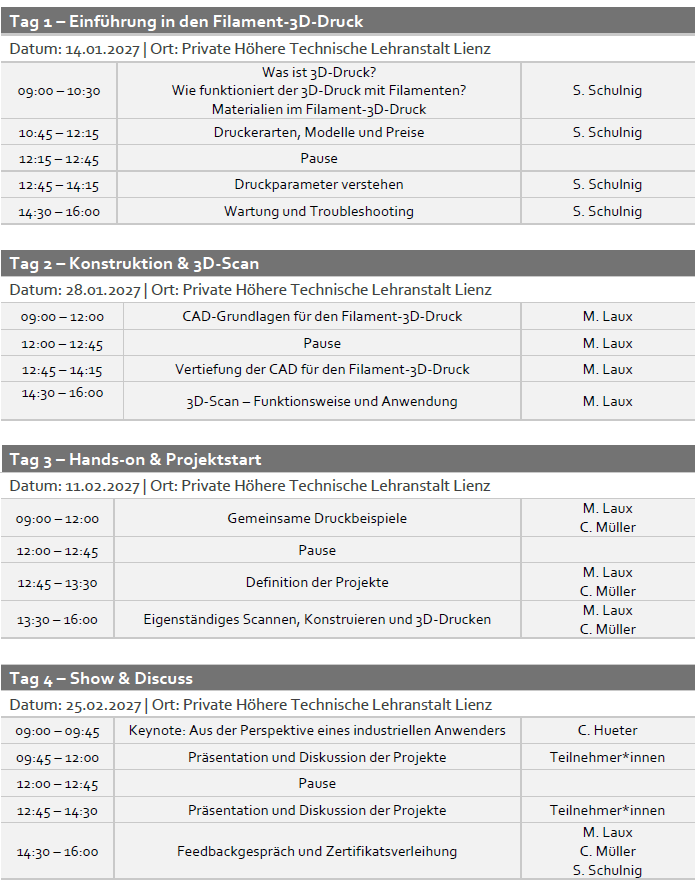
Four Course Days - from the Basics to your own 3D Printing Project
Virtual Campus Tour
On foot
From the Villach Seebach train station, you can reach the campus in about 20 minutes on foot (1.6 km). The route follows the Drau River to the campus.
By public transportation
The campus is directly accessible from Villach Central Station via bus lines 3 and 8 to the “Technologiepark” stop. From the Villach Seebach train station, you can also reach the campus by taking bus line 8 to the “Technologiepark” stop. The Villach city bus schedules are coordinated with the ÖBB schedules.
By car
Coming from Klagenfurt/Vienna, take the A2 Südautobahn to the Wernberg exit. From there, follow the B83 Kärntner Straße toward Villach for about 2 km, then follow the signs toward Magdalenen See or Technologiepark.
Coming from Salzburg/Munich via the A10 Tauern Autobahn, take the Villach/Ossiacher See exit and follow the B33 Kärntner Straße for about 2 km toward Wernberg/Klagenfurt. Then turn toward Magdalenen See and follow the road to the Technology Park.
There are several free parking spaces right in front of the building, and additional paid parking spaces are available in the surrounding area.
By Plane
There are several airports in the area:
- Klagenfurt: approx. 30-minute drive
- Ljubljana (Slovenia): approx. 1-hour drive
- Graz: approx. 2-hour drive
- Salzburg: approx. 2-hour drive
- Trieste and Venice (Italy): about 2 to 3 hours by car
- Vienna: about a 4-hour drive
- Munich: approx. 4-hour drive
From there, you can continue your journey to the Villach campus by train, bus, taxi, or car.
Contact
Dr. mont. Sandra Schulnig
Research Director
+43 5 90500 2156
s.schulnig(at)cuas.at
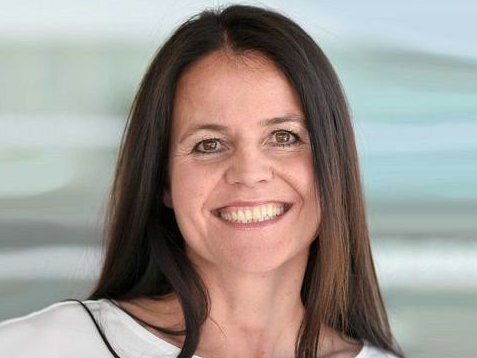
Mag.a Alexandra Liegl.
Head of CU Academy
+43 5 90500 4311
a.liegl(at)cuas.at
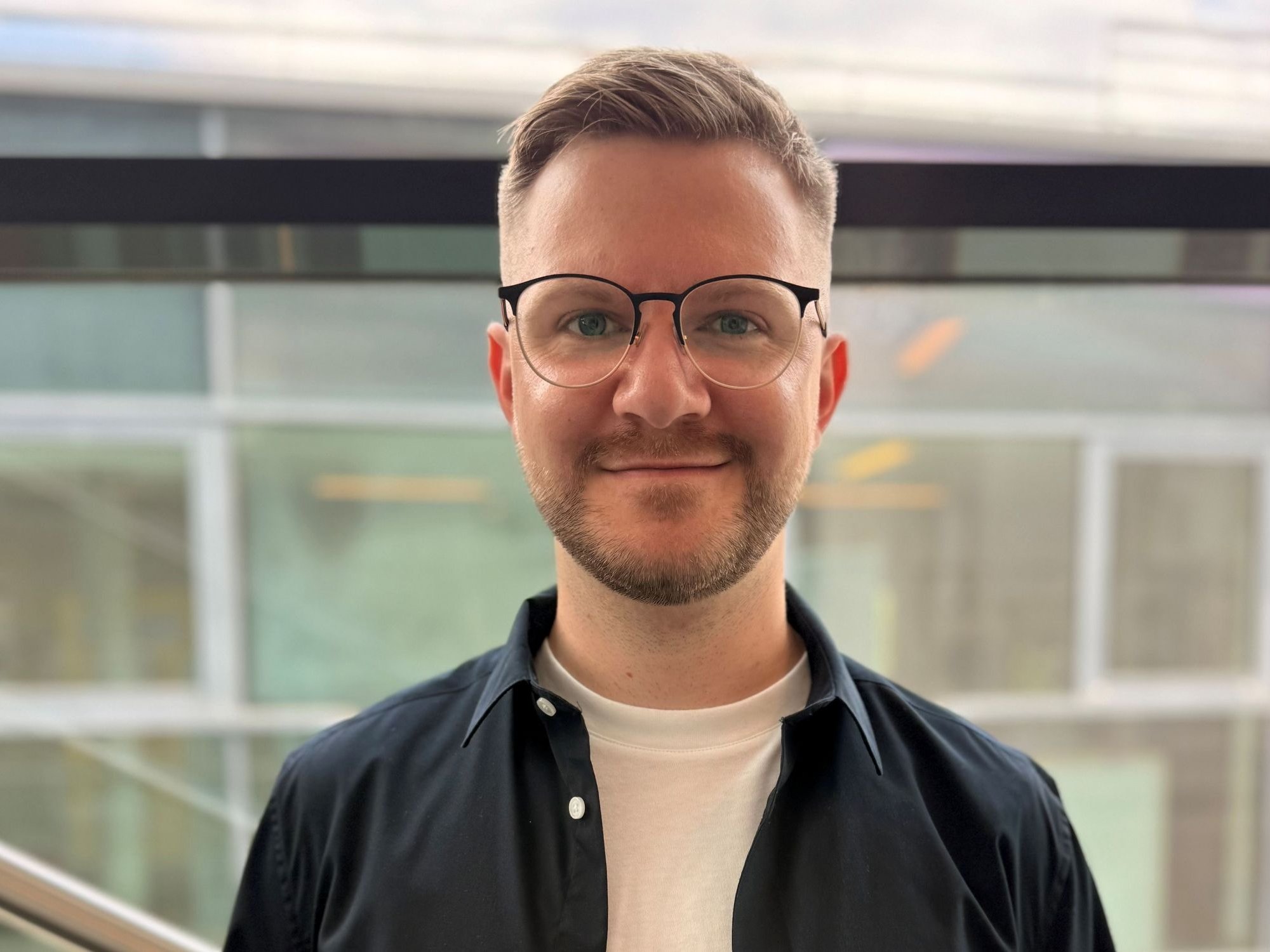
Fabian Smolnik, B.A.
Manager of Educational Programs
+43 5 90500 4316
f.smolnik(at)cuas.at