

Power Electronics - MC

With the “Power Electronics” Micro Credential from CU Carinthia University, you’ll gain a solid introduction to power electronics. You’ll learn how electrical energy is converted, controlled and harnessed for various technical applications using modern power electronic systems.
Power electronics plays a central role in renewable energy systems, vehicle and traction systems, chargers, household appliances, medical devices, industrial applications and the aerospace industry, among others.
In this short academic program, you will learn to understand how various power converters work and to analyze modern energy conversion systems. You will examine common converter topologies, design suitable circuits and simulate power electronics systems using SPICE and PLECS.
This Micro Credential is intended for individuals with a technical background who are entering the semiconductor applications industry or wish to expand their knowledge in the fields of power electronics and semiconductor applications. A basic understanding of voltage, current, passive components and electrical circuits will help you get started.
“Power Electronics” is one of five Micro Credentials from various partner institutions that together form the Micro Degree “Certificate of Advanced Studies in Electronic-based Systems,” coordinated by TU Graz LLL. Upon successful completion of all five Micro Credentials, the certificate is issued by TU Graz. The Micro Degree can also serve as a foundation for further education leading to a related Bachelor’s Degree program.
Turn energy into sustainable progress.
Use the MC Power Electronics to strengthen your skills in modern power electronics and energy conversion.
Info Box
Level of qualification
Academic Short Program
ECTS credits
4
Tuition fees
€ 1,950
ÖH (Austrian Student Union) fee
€ 26.20 / Semester
Info Box
Qualification awarded
Part of a Micro Degree at TU Graz
(Certificate from TU Graz upon successful completion of all five MC's)
Duration of study
8 half days online/hybrid, excluding self-study
Language of instruction
English
Location
E-Learning, online
Dates Infobox
Dates will be announced shortly.
The registration deadline will be announced shortly.
A completed HTL program or a comparable technical qualification is required; basic knowledge of electrical engineering and circuit analysis is helpful.
For more information, please email us at c.zdolsek(at)cuas.at.
Click here to apply.
Here's what you can expect from the Micro Credential
From converter topologies to control engineering
Power Electronics Circuits and Topologies
You’ll explore steady-state analysis, characteristics, comparisons and design guidelines for various types of electrical energy conversion:
- DC/DC conversion: Buck, boost, flyback, forward, SEPIC and ZETA converters; simple magnetic components for flyback and forward converters; and continuous and discontinuous operation
- AC/DC conversion: diode-bridge rectifiers, boost power factor correction, bridge-less boost and totem-pole circuits, as well as fully controlled active front-ends
- DC/AC conversion: inverters and LCL filters
- Modulation techniques for DC/AC and AC/DC converters: bipolar and unipolar sinusoidal pulse-width modulation, as well as space-vector modulation
Modeling and Control of Power Electronic Converters
You will learn the fundamentals of control engineering and explore Laplace transforms, transfer functions and stability analyses using Bode and Nyquist plots.
Additional topics include:
- Dynamic equations of buck, boost and buck-boost converters
- Small-signal models and transfer functions of power electronic converters
- AC equivalent circuits based on the converter models
- Design of feedback systems using pole placement
- Voltage control
- Peak-value and average-value current control
Virtual Campus Tour
On foot
From the Villach Seebach train station, you can reach the campus in about 20 minutes on foot (1.6 km). The route follows the Drau River to the campus.
By public transportation
The campus is directly accessible from Villach Central Station via bus lines 3 and 8 to the “Technologiepark” stop. From the Villach Seebach train station, you can also reach the campus by taking bus line 8 to the “Technologiepark” stop. The Villach city bus schedules are coordinated with the ÖBB schedules.
By car
Coming from Klagenfurt/Vienna, take the A2 Südautobahn to the Wernberg exit. From there, follow the B83 Kärntner Straße toward Villach for about 2 km, then follow the signs toward Magdalenen See or Technologiepark.
Coming from Salzburg/Munich via the A10 Tauern Autobahn, take the Villach/Ossiacher See exit and follow the B33 Kärntner Straße for about 2 km toward Wernberg/Klagenfurt. Then turn toward Magdalenen See and follow the road to the Technology Park.
There are several free parking spaces right in front of the building, and additional paid parking spaces are available in the surrounding area.
By Plane
There are several airports in the area:
- Klagenfurt: approx. 30-minute drive
- Ljubljana (Slovenia): approx. 1-hour drive
- Graz: approx. 2-hour drive
- Salzburg: approx. 2-hour drive
- Trieste and Venice (Italy): about 2 to 3 hours by car
- Vienna: about a 4-hour drive
- Munich: approx. 4-hour drive
From there, you can continue your journey to the Villach campus by train, bus, taxi, or car.
Contact

Ph.D. Emmanuel Seun Oluwasogo
Scientific Management
+43 5 90500 2158
e.oluwasogo(at)cuas.at
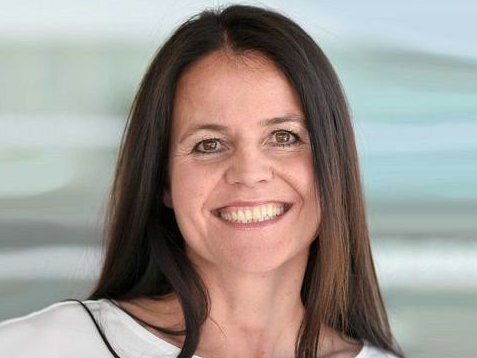
Mag.a Alexandra Liegl.
Head of CU Academy
+43 5 90500 4311
a.liegl(at)cuas.at
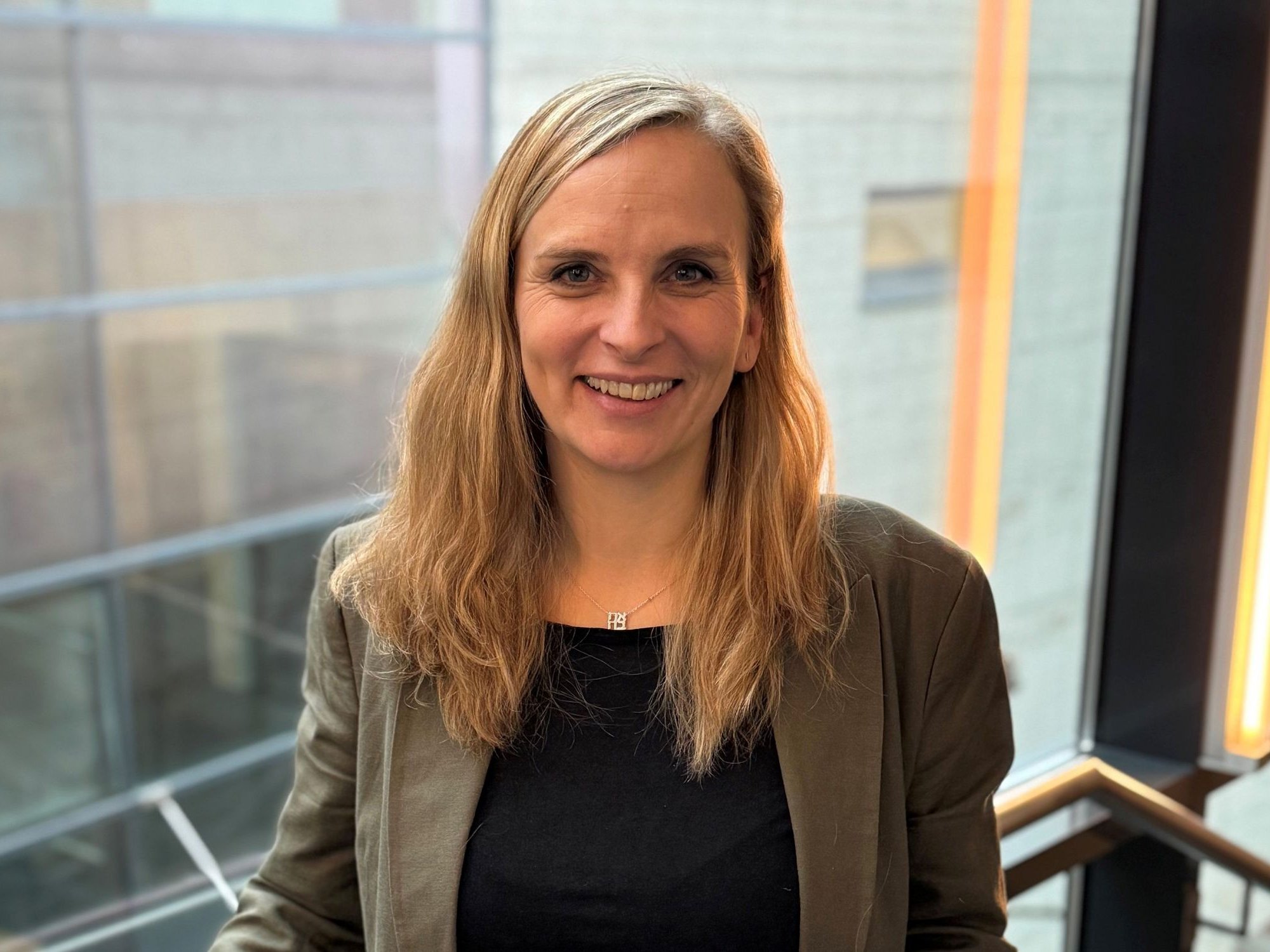
Claudia Zdolšek, Bakk.phil., BEd, MA
Manager of Educational Programs
+43 5 90500 4319
c.zdolsek(at)cuas.at