

Digital Tax & Accounting - BA
In the Digital Tax & Accounting (DTA) bachelor’s degree program at CU Carinthia University of Applied Sciences on the Villach campus, you’ll prepare for the digital transformations in tax consulting, auditing, and accounting.
You’ll learn to contextualize business challenges within a digital framework and gain a solid understanding of new requirements in the professional field. In the process, you’ll receive a contemporary academic education in a key area of business.
This will lay the foundation for you to provide expert guidance on developments in tax consulting and auditing and to actively help shape the digital future of the profession.
Is DTA the right degree program for you?
This degree program is a good fit for you if you think analytically and systematically, enjoy working in a team, and take responsibility for your actions. Strong language and communication skills, as well as an interest in innovative technologies, are highly desirable.
Here's how flexible studying Digital Tax & Accounting can be
You can study DTA full-time or part-time. Practical case studies and a mandatory professional internship complement your academic training and allow you to apply your knowledge in a practical setting.
What kind of content can you expect?
Among other things, you will study data management, IT law and security, business information systems, and data analytics. You will also study tax law, payroll accounting, financial reporting, and general management.
Are you looking for new challenges that combine tradition and innovation?
Let’s drive the digital revolution in tax and accounting…
Special features of the program
Partnerships with Tax Advisors and Certified Public Accountants
The program maintains active dialogue with industry partners in tax consulting and auditing. As a result, the curriculum is specifically tailored to the requirements and developments of the profession.
Combining School and Work from the Start
Through the Study & Work program at CU University of Carinthia, you can begin working at one of Carinthia’s leading tax consulting and auditing firms right from the start of your studies. This allows you to combine your academic education with professional experience from the very beginning.
Prepared for challenging consulting assignments
You will learn how to effectively leverage opportunities for digitizing accounting processes and procedures. You will also develop concepts for digital processes in collaboration with clients and tax authorities and prepare for complex consulting engagements.
Details About the Program




Info Box
Level of qualification
Bachelor
ECTS credits
180
Tuition fees*
€ 363.36 / Semester
ÖH (Austrian Student Union) fee
€ 26.20 / Semester
Qualification awarded
Bachelor of Arts in Business
Duration of study
6 Semester
Language of instruction
German
CU Campus
Villach
Level of qualification
Bachelor
ECTS credits
180
Tuition fees*
€ 363.36 / Semester
ÖH (Austrian Student Union) fee
€ 26.20 / Semester
Qualification awarded
Bachelor of Arts in Business
Duration of study
6 Semester
Language of instruction
English
CU Campus
Villach
Level of qualification
Bachelor
ECTS credits
180
Tuition fees*
€ 363.36 / Semester
ÖH (Austrian Student Union) fee
€ 26.20 / Semester
Qualification awarded
Bachelor of Arts in Business
Duration of study
6 Semester
Language of instruction
German
CU Campus
Villach
Level of qualification
Bachelor
ECTS credits
180
Tuition fees*
€ 363.36 / Semester
ÖH (Austrian Student Union) fee
€ 26.20 / Semester
Qualification awarded
Bachelor of Arts in Business
Duration of study
6 Semester
Language of instruction
German
CU Campus
Villach
Dates Info Box
Business Management
Public Management
01.11.-31.07.
Digital Business Management
01.11.-31.05.
01.06.-31.07.*
Digital Tax & Accounting
01.11.-31.07.
01.08.-30.09.*
*we reserve the right to close this period early
The start of lectures can be found in the individual timetable which is available after enrollment. We start already in September.
6 weekends per semester in presence:
Friday: 10:10 h - 17:40 h
Saturday: 08:30 h - 16:00 h
+ 3 Saturdays in hybrid form and interactive online teaching units on Tuesday and/or Wednesday evening (17:40 h - 20:10 h)
An overview on our upcoming events can be found here.
You are interested in a personal (online) study consultation or would like to receive more information on the degree program? Click on the buttons below this checkbox to learn more.
Language of Instruction: German (min B2)
Application essentials:
More information on the application process, admission requirements and necessary documents can be found here.
Digital Marketing & Sales:
Period I & II: 01.11.-31.05.
Intercultural Management:
Period I-III: 01.11.-31.07.
Please note the guidelines for applications from outside Western, Central, and Southeastern Europe.
The semester starts in October - we only offer intake in winterterm!
The start of lectures can be found in the individual timetable which is available after enrollment.
Monday to Friday full-time and occasionally on Saturdays.
An overview on our upcoming events can be found here.
You are interested in a personal (online) study consultation or would like to receive more information on the degree program? Click on the buttons below this checkbox to learn more.
Language of Instruction: English (min B2)
Application essentials:
More information on the application process, admission requirements and necessary documents can be found here.
Winterterm 2026
Period I: 01.11.-15.03.26
Period II: 16.03.-15.05.26
Period III: 16.05.-15.07.26
Period IV: 16.07.-30.09.26*
Due to lengthy visa processes, applications from Africa, the Middle East and South, East, and Southeast Asia only in Period I.
*We reserve the right not to open the period or to close it early.
The semester starts in October - we only offer intake in winterterm!
The start of lectures can be found in the individual timetable which is available after enrollment.
Monday to Friday full-time and occasionally on Saturdays
An overview on our upcoming events can be found here.
You are interested in a personal (online) study consultation or would like to receive more information on the degree program? Click on the buttons below this checkbox to learn more.
Language of Instruction: German (min B2)
Application essentials:
More information on the application process, admission requirements and necessary documents can be found here.
Winterterm 2027
Period I: 01.11.-15.03.
Period II: 16.03.-31.05.
Period III: 01.06.-31.07.*
Please note the guidelines for applications from outside Western, Central, and Southeastern Europe
*We reserve the right to close this period early.
The winter semester officially begins in September.
Monday through Friday all day and occasionally on Saturdays. The theoretical phase runs from September through the end of November. The practical phase runs from December through the end of February.
An overview on our upcoming events can be found here.
You are interested in a personal (online) study consultation or would like to receive more information on the degree program? Click on the buttons below this checkbox to learn more.
Language of Instruction: German (min B2)
Application essentials:
More information on the application process, admission requirements and necessary documents can be found here.
* Tuition for non-EU/EEA citizens: €500 + €26.20 ÖH fee (per semester)
FAQ
Frequently asked questions about the
“Digital Tax & Accounting” Bachelor’s Degree Program
What sets the DTA program apart from a general business degree?
In addition to a broad foundation in business, you’ll receive targeted specialization in taxation, accounting, and digitalization. This program was developed in collaboration with the Academy of Tax Advisors and Certified Public Accountants and is closely aligned with the demands of professional practice.
Does the program prepare students for a career in tax consulting and auditing?
Yes, this program was specifically designed to prepare students for positions of responsibility in the fields of tax consulting and auditing. The curriculum is tailored to the professional and digital requirements that employees in these firms face in their day-to-day work.
What is the significance of data analysis and business intelligence?
Through quantitative data analysis and business intelligence and analytics, you will learn to evaluate economic data in a structured manner. This knowledge will help you prepare information for decision-making in the areas of taxation, accounting, and business.
Book an online information session
During the online information sessions, the program directors or academic directors provide detailed information about the program. Topics include course content, internships, admission requirements, and potential career prospects.

Irina Lindermüller, M.A., Ph.D.
Director of the
Digital Tax & Accounting
Program +43 5 90500 2425
i.lindermueller(at)cuas.at
INFORMATION & APPLICATION
Virtual Campus Tour
Contact
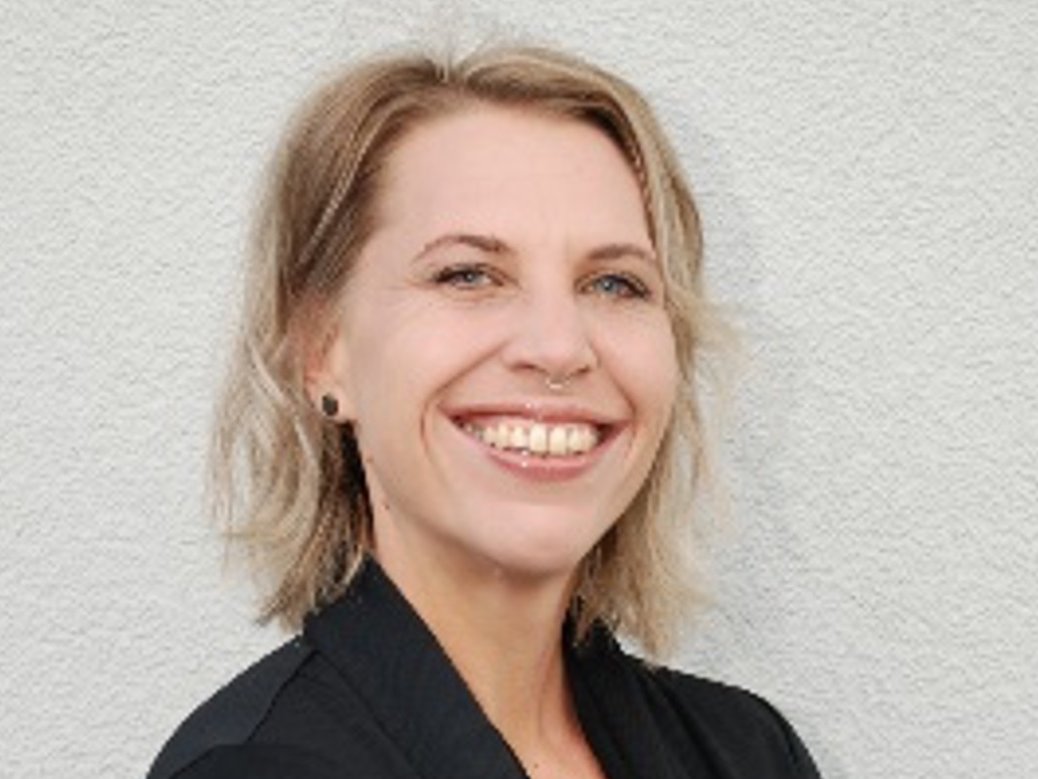
Romana Pechac
Administration
+43 5 90500 2401
r.pechac(at)cuas.at
On foot
From the Villach Seebach train station, you can reach the campus in about 20 minutes on foot (1.6 km). The route follows the Drau River to the campus.
By public transportation
The campus is directly accessible from Villach Central Station via bus lines 3 and 8 to the “Technologiepark” stop. From the Villach Seebach train station, you can also reach the campus by taking bus line 8 to the “Technologiepark” stop. The Villach city bus schedules are coordinated with the ÖBB schedules.
By car
Coming from Klagenfurt/Vienna, take the A2 Südautobahn to the Wernberg exit. From there, follow the B83 Kärntner Straße toward Villach for about 2 km, then follow the signs toward Magdalenen See or Technologiepark.
Coming from Salzburg/Munich via the A10 Tauern Autobahn, take the Villach/Ossiacher See exit and follow the B33 Kärntner Straße for about 2 km toward Wernberg/Klagenfurt. Then turn toward Magdalenen See and follow the road to the Technology Park.
There are several free parking spaces right in front of the building, and additional paid parking spaces are available in the surrounding area.
By Plane
There are several airports in the area:
- Klagenfurt: approx. 30-minute drive
- Ljubljana (Slovenia): approx. 1-hour drive
- Graz: approx. 2-hour drive
- Salzburg: approx. 2-hour drive
- Trieste and Venice (Italy): about 2 to 3 hours by car
- Vienna: about a 4-hour drive
- Munich: approx. 4-hour drive
From there, you can continue your journey to the Villach campus by train, bus, taxi, or car.