Study content and requirements
for the Healthcare and Nursing Program
What should you bring with you for your studies?
For the Bachelor’s Program in Healthcare and Nursing, you should have an interest in nursing, medical, and health-related topics. You enjoy working with people, are happy to take on responsibility, and want to professionally guide and support people in various life situations.
Other important qualities include empathy, strong communication skills, a team spirit, and a willingness to grow both professionally and personally. Physical and mental fitness, as well as the ability to handle stress, are also essential for a career in nursing.
Motivation, an openness to new ideas, and an interest in scientific findings will help you successfully master the diverse demands of the program and continuously develop your skills.
Additional formal admission requirements:
- a general high school diploma (SIC) or an equivalent qualification
- proof of the immunizations listed on the vaccination record
- Criminal record check
What you will learn during your studies
In the Bachelor’s Program in Healthcare and Nursing, you will gain a solid foundation in nursing science, medicine, and the fundamentals of nursing, communication, law, and research. You will learn to provide professional care to people of all ages, design health care processes, and make nursing decisions based on current scientific findings.
There is a particular emphasis on the close integration of theory and practice. We have nearly 300 clinical partners throughout Austria. You can choose a clinical placement close to home for one of your 12 different clinical rotations. Students also have the opportunity to gain experience abroad through the ERASMUS exchange program.
Practical learning is at the heart of the program: In modern simulation settings, you will practice handling complex nursing situations, clinical decision-making, and teamwork with simulation patients and high-fidelity simulators. Simulation training is an integral part of the program and allows you to practice even challenging situations in a safe learning environment.
During your studies, you will engage with current research topics and learn how new findings can transform nursing practice. Through insights into the university’s research projects, you will discover how innovative ideas emerge and contribute to the advancement of healthcare.
As part of the program, you can complete training to become a paramedic or emergency medical technician.
General information about the Program
For more information on admission requirements, the training contract, nostrification and recognition, the admissions process, examination regulations and grading, ECTS credits, and the academic calendar, please refer to the General Study Information.
FAQ
Frequently asked questions about “Healthcare and Nursing” Bachelor’s Degree
Support for your studies in Healthcare and Nursing
Several funding options are available for the Healthcare and Nursing Program, including scholarships and educational grants for various target groups.
-> More on Funding OpportunitiesCareer Change for Nursing Assistants & Certified Nursing Assistants
Have you already completed nursing education? Find out about your career entry options and learn how your previous educational background can be taken into account.
-> For Career ChangersUpgrade for Certified Healthcare Nurses
Are you already a certified Healthcare and Nursing Professional and would like to earn a Bachelor's Degree?
-> To UpgradeCurrent Courses
Current course - Healthcare and Nursing · Organisation form: Vollzeit (German)
Scholarships for the Bachelor's Degree program in Healthcare and Nursing
Depending on your personal situation, you can choose from a variety of scholarships and educational grants.
Scholarship Kärntner Sparkasse Private Foundation
The scholarship is intended for career changers who decide to pursue a Degree in Healthcare and Nursing. It supports graduates of other Degree programs as well as individuals over the age of 30 who are planning a new career path and were previously ineligible for financial aid.
→ Information about Sparkasse ScholarshipScholarship Humanomed Group
The Humanomed Group provides financial support to students in the fields of Healthcare and Nursing and also offers subsidized internships at its facilities.
Care Scholarship Federal Government
The Care Scholarship supports, among others, unemployed individuals or those on parental leave, as well as high school graduates and college dropouts who meet the eligibility requirements. Applications are submitted through the AMS and must be filed before enrolling in a Degree program.
→ Information about Care ScholarshipNursing Training Grant Land Kärnten
The Nursing Training Grant supports students during their training and encourages them to pursue a career in the health and social services sector.
Nursing requires expertise, responsibility, and compassion.
Develop the knowledge and skills to support people professionally and actively help shape the future of Healthcare.
Jobs & Careers
With a Bachelor’s Degree in Healthcare and Nursing, you’ll qualify for a senior-level position in health and nursing. You’ll support people of all ages in various life situations, take responsibility for nursing decisions, and collaborate with other healthcare professionals to provide professional care.
Career Prospects
- You can work in both inpatient and outpatient/day-care settings, such as day hospitals or mobile care services.
- You’ll advise patients and their families and work in health promotion, health maintenance, and disease prevention.
- In general health and nursing care, a wide range of career paths are open to you – such as in internal medicine, surgery, gynecology, oncology, urology, orthopedics, or trauma surgery.
- You’ll care for people of all ages with physical or mental health conditions and help them maintain or regain their physical, mental, and social abilities.
- You can also take on expert assessment roles and assume responsibility for nursing organization and quality management.
- With the appropriate additional qualifications, you can specialize and work in fields such as intensive care, anesthesia, or the operating room.
You can work in these professional fields
- Health Care Facilities
- Rehabilitation centers
- Nursing homes and care centers
- Hospice facilities
- Assisted living communities
- Day centers
- Mobile nursing and care services
- Health and social service centers
- Public and private social insurance providers
- Public health services
- Training and continuing education institutions for nursing and healthcare professions
- Kindergartens and schools
- Pharmaceutical industry
- IT and health records
What's next after earning a Bachelor's Degree?
Upon successful completion, you will be qualified for the higher civil service in healthcare and nursing and will receive the Academic Degree: Bachelor of Science in Health Studies (BSc). At the same time, you will lay the foundation for further specializations and your academic career:
- Advanced Nursing Practice in Primary Care (ANP)
- Healthcare Management
- Applied Telemedicine in the Health Professions
- Client-Centered Evidence-Based Healthcare (EBGV)
Depending on your professional interests, you can pursue further qualifications in various fields. These include, for example, specializations in accordance with the Health and Nursing Care Act or additional university courses for in-depth professional development.
- Pedagogy for Health and Nursing Professions
- Specialization in Intensive Care
- Specialization in Psychiatric Health and Nursing Care
- Professional Clinical Supervision and Clinical Instruction
- Basic & Intermediate Nursing Management
- Pediatric and Adolescent Nursing
- Cancer Nurse
Temporary Learning Station
Nursing Training Unit
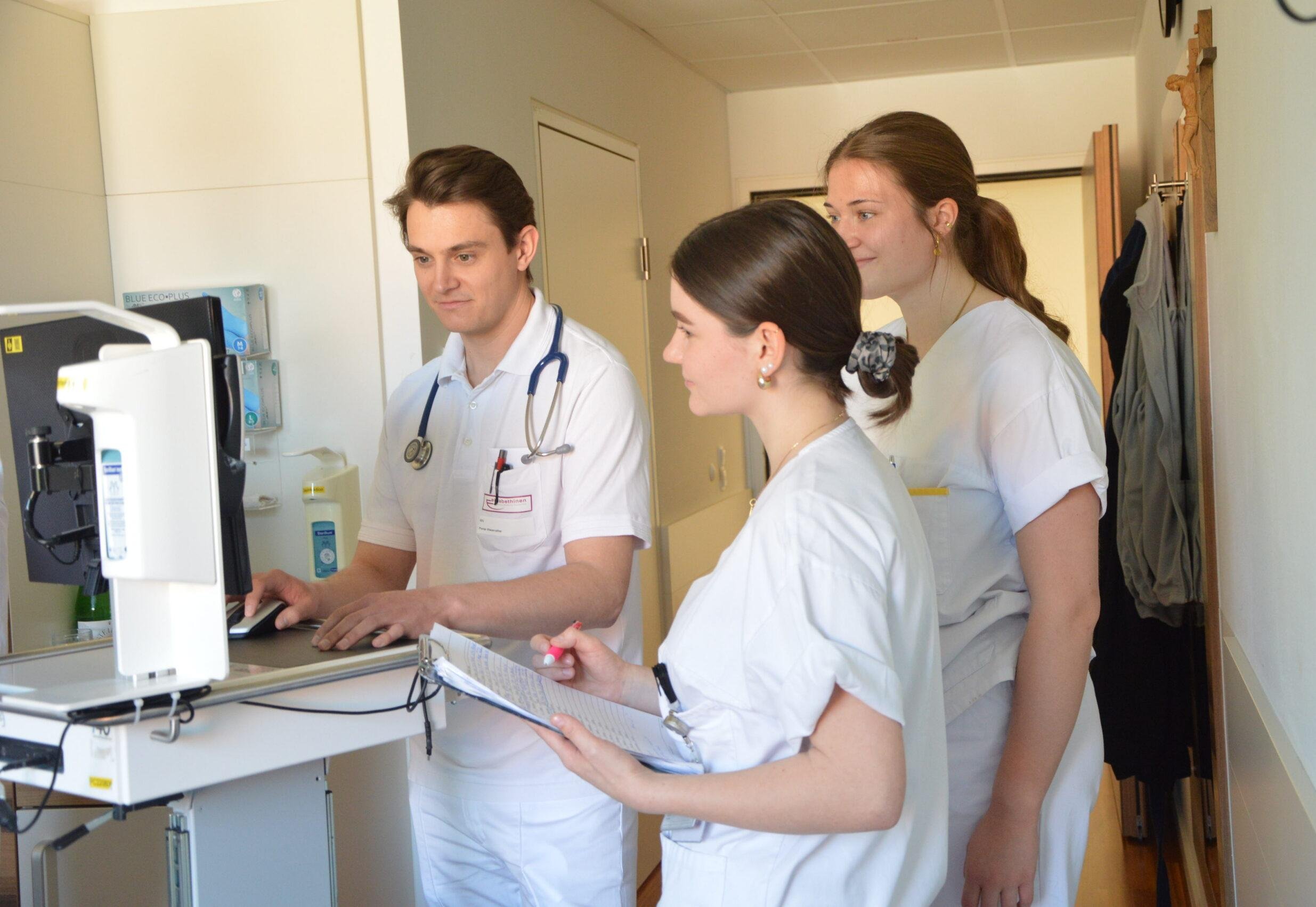
A particular highlight is the Temporary Learning Station (Nursing Training Unit) at the Elisabethinen Hospital in Klagenfurt. There, students in their final semester share responsibility for the organization, supervision, and care of patients and gain firsthand experience of how professional nursing works in everyday practice. This ensures a particularly hands-on transition from academic study to professional practice.