
Industrial Engineering and Management BSc
Bachelor's Degree Program
Between the engineer and the manager stands one person. That’s you. Industrial Engineering and Management (WING) at CU Carinthia University is the bachelor’s program for people who not only understand technology and business but truly bring them together.
What exactly will you learn in the Bachelor’s program in Industrial Engineering and Management? You’ll analyze production systems, lead projects, and think strategically–and you’ll act as a bridge: between development and management, between technical feasibility and economic viability. Personal development, communication, and leadership skills are integral parts of the curriculum, not just add-ons.
Starting in the third semester, you’ll choose your specialization: Industrial Engineering or Sustainable Innovation Management.
You’ll learn in small groups, with personalized guidance and genuine connections to Carinthia’s high-tech industry–Infineon, Hella, Magna, AVL. Villach is the headquarters of Infineon Austria: the industrial network in which you’ll study is real and right here on the ground, not just on slides.
The Industrial Engineering and Management program lasts 6 semesters, comprises 180 ECTS credits, and leads to a Bachelor of Science in Engineering at the Villach campus. The full-time track is taught in English, while the part-time track is taught in German.
Who is this degree program suitable for?
The bachelor's program is suitable for HTL and HAK graduates, AHS high school graduates, and working professionals–for anyone who doesn't want to limit themselves to one field but instead wants to combine technical and business knowledge.
Choose from two specialization options
In the Industrial Engineering and Management program, you can choose between two areas of specialization starting in the third semester: Industrial Engineering or Sustainable Innovation Management
Well-prepared for university
You don't need any prior programming experience. Mathematics, physics, and computer science are introduced gradually in the industrial engineering and management program–what matters most is an interest in technology and a willingness to think analytically.
Engineering or management? At WING at CU, you don’t have to choose – you can combine both.
6 semesters, 180 ECTS, real-world industry experience in Villach. Full-time or part-time.
Special Features of the Program
For us, personal competence isn't just a side effect—it's at the heart of what we do.
In many degree programs, you study technology and business side by side. At WING, the person who combines both is the very focus of our educational mission. The required modules—Personal Competencies, AI-Supported Problem-Solving Skills, and Communication Skills, each worth 5 ECTS credits—transform these concepts into structured course content rather than mere claims: critical thinking, judgment, ethics, international communication, resilience, and the responsible use of AI.
Interdisciplinary—with genuine depth rather than arbitrariness.
In an industrial engineering program, you combine a solid foundation in engineering with business expertise, thereby distinguishing yourself from purely technical fields (mechanical engineering, mechatronics), purely business-oriented fields (business administration), and purely software development (computer science). This doesn’t make you a generic generalist, but rather gives you the cross-functional expertise that companies seek in leadership positions.
AI Meets Manufacturing — in the Lecture Hall and in the Lab.
Artificial intelligence and the smart factory are part of the curriculum, not just buzzwords. AI is a required course for everyone: In the module “AI-Supported Problem-Solving Skills,” you’ll learn to apply generative AI in a targeted manner and evaluate it critically. The Industrial Engineering specialization complements cyber-physical production systems and machine learning. As evidenced by various research projects in this field: What the instructors discover in the lab is what you’ll hear in the lecture.
Small groups. Personalized care. From day one.
In the Bachelor’s program in Industrial Engineering, you’re not just a number. Learning and networking happen in small groups with personal interaction with faculty—that’s the core of the CU mentorship philosophy and our commitment to quality.
Your industry partners: Infineon, Hella, Magna, AVL, etc.
Not a simulation industry, but the real thing: Carinthia’s high-tech companies are real-world partners, not just textbook examples. Villach is the headquarters of Infineon Austria—that’s why the industrial engineering and management program is offered here and not in Vienna.
Your journey doesn't end with a bachelor's degree.
Industrial Engineering and Management is offered in two formats: full-time and part-time. Both lead to the same master’s degree: Industrial Engineering & Management at CU—part-time, on the same campus, and with the same faculty. You decide how you study—not how far you’ll go.
Details About the Program




Info Box
Level of qualification
Bachelor
ECTS credits
180
Tuition fees*
€ 363.36 / Semester
ÖH (Austrian Student Union) fee
€ 26.20 / Semester
Qualification awarded
Bachelor of Science in Engineering
Duration of study
6 Semester
Language of instruction
German
CU Campus
Villach
Level of qualification
Bachelor
ECTS credits
180
Tuition fees*
€ 363.36 / Semester
ÖH (Austrian Student Union) fee
€ 26.20 / Semester
Qualification awarded
Bachelor of Science in Engineering
Duration of study
6 Semester
Language of instruction
German
CU Campus
- Villach
- Wolfsberg
Level of qualification
Bachelor
ECTS credits
180
Tuition fees*
€ 363.36 / Semester
ÖH (Austrian Student Union) fee
€ 26.20 / Semester
Qualification awarded
Bachelor of Science in Engineering
Duration of study
6 Semester
Language of instruction
German
CU Campus
Villach
Level of qualification
Bachelor
ECTS credits
30
Tuition fees*
€ 363.36 / Semester
ÖH (Austrian Student Union) fee
€ 26.20 / Semester
Qualification awarded
Duration of study
2 Semester
Language of instruction
German
CU Campus
- Klagenfurt
- Villach
Dates Info Box
Winterterm 2026
Period I: 01.11.-15.03.26
Period II: 16.03.-15.05.26
Period III: 16.05.-15.07.26
Period IV: 16.07.-30.09.26*
Due to lengthy visa processes, applications from Africa, the Middle East and South, East, and Southeast Asia only in Period I.
*We reserve the right not to open the period or to close it early.
The semester starts in October - we only offer intake in winterterm!
The start of lectures can be found in the individual timetable which is available after enrollment.
Mon & Wen from 17:40 h
Fri from 16:00 h
Sat full-time
An overview on our upcoming events can be found here.
You are interested in a personal (online) study consultation or would like to receive more information on the degree program? Click on the buttons below this checkbox to learn more.
Language of Instruction: German (min B2)
Application essentials:
More information on the application process, admission requirements and necessary documents can be found here.
Winterterm 2026
Period I: 01.11.-15.03.26
Period II: 16.03.-15.05.26
Period III: 16.05.-15.07.26
Period IV: 16.07.-30.09.26*
Due to lengthy visa processes, applications from Africa, the Middle East and South, East, and Southeast Asia only in Period I.
*We reserve the right not to open the period or to close it early.
The semester starts in October - we only offer intake in winterterm!
The start of lectures can be found in the individual timetable which is available after enrollment.
Mo & Wen from 17:40 h
Fri from 14:20 h
Sat full-time
An overview on our upcoming events can be found here.
You are interested in a personal (online) study consultation or would like to receive more information on the degree program? Click on the buttons below this checkbox to learn more.
Language of Instruction: German (min B2)
Application essentials:
More information on the application process, admission requirements and necessary documents can be found here.
Winterterm 2026
Period I: 01.11.-15.03.26
Period II: 16.03.-15.05.26
Period III: 16.05.-15.07.26
Period IV: 16.07.-30.09.26*
Due to lengthy visa processes, applications from Africa, the Middle East and South, East, and Southeast Asia only in Period I.
*We reserve the right not to open the period or to close it early.
The semester starts in October - we only offer intake in winterterm!
The start of lectures can be found in the individual timetable which is available after enrollment.
Mo - Fri full-time
Sometimes Saturday
An overview on our upcoming events can be found here.
You are interested in a personal (online) study consultation or would like to receive more information on the degree program? Click on the buttons below this checkbox to learn more.
Language of Instruction: German (min B2)
Application essentials:
More information on the application process, admission requirements and necessary documents can be found here.
Study Guidance
Book your personal appointment right now!
You can find out more about our advisory services, events and fairs on our website.
* Tuition for non-EU/EEA citizens: €500 + €26.20 ÖH fee (per semester)
FAQ
Frequently Asked Questions About the Bachelor’s Program in Industrial Engineering and Management (BSc)
What makes WING special?
The Industrial Engineering (WING) bachelor program combines engineering with business administration and project management–ideal for anyone who wants to tackle technical and business challenges together.
How practical is the program?
Practical experience is an integral part of the Industrial Engineering program: Through a required internship, real-world industry projects, and work in the Smart Lab and the Innovation Workshop, you’ll gain valuable experience and establish early connections with companies.
What career opportunities do I have?
A degree in industrial engineering opens the door to a wide range of career paths–from production and quality management to project and innovation management, and even technical purchasing. Alternatively, you can deepen your knowledge by pursuing a consecutive master’s degree in Industrial Engineering & Management.
Book an Online Information Session
Before you apply, get to know us: Program Director FH-Prof. DI Dr. Erich Alois Hartlieb will answer all the questions that a program webpage can’t cover during the online information session–from admission requirements to real-world career paths.
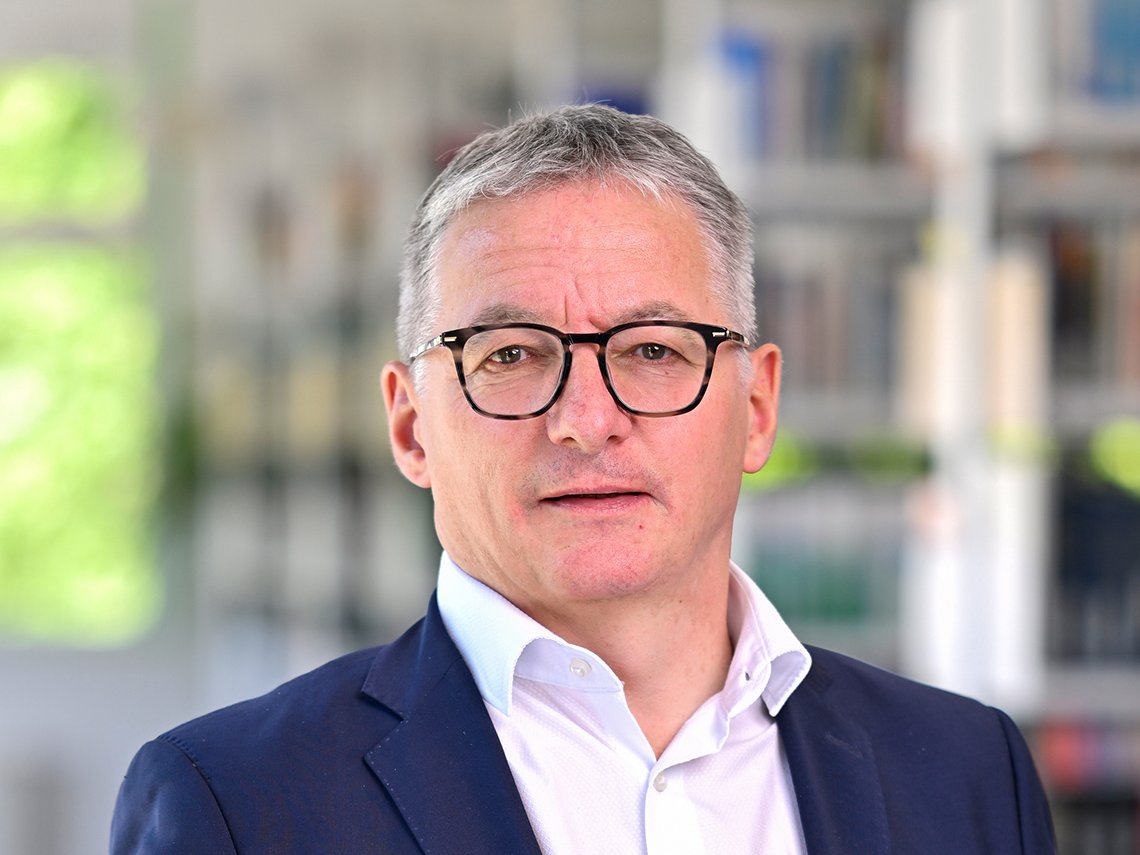
FH Professor Erich Alois Hartlieb, DI, Ph.D.
Program Director, Industrial Engineering & Management
+43 5 90500 2220
e.hartlieb(at)cuas.at
Research and Teaching Facilities
The laboratories at CU Carinthia University provide a modern infrastructure that supports hands-on learning and innovative research. Equipped with state-of-the-art technologies and specialized equipment, they enable students and researchers to work on projects across a wide range of fields, including engineering, computer science, business, and health.
The laboratories are designed to meet current industry standards and requirements, providing an ideal environment for developing new ideas, technologies, and solutions.
INFORMATION & APPLICATION
Virtual Campus Tour
Contact
Dagmar Kofler
Administration
d.kofler(at)cuas.at
On foot
From the Villach Seebach train station, you can reach the campus in about 20 minutes on foot (1.6 km). The route follows the Drau River to the campus.
By public transportation
The campus is directly accessible from Villach Central Station via bus lines 3 and 8 to the “Technologiepark” stop. From the Villach Seebach train station, you can also reach the campus by taking bus line 8 to the “Technologiepark” stop. The Villach city bus schedules are coordinated with the ÖBB schedules.
By car
Coming from Klagenfurt/Vienna, take the A2 Südautobahn to the Wernberg exit. From there, follow the B83 Kärntner Straße toward Villach for about 2 km, then follow the signs toward Magdalenen See or Technologiepark.
Coming from Salzburg/Munich via the A10 Tauern Autobahn, take the Villach/Ossiacher See exit and follow the B33 Kärntner Straße for about 2 km toward Wernberg/Klagenfurt. Then turn toward Magdalenen See and follow the road to the Technology Park.
There are several free parking spaces right in front of the building, and additional paid parking spaces are available in the surrounding area.
By Plane
There are several airports in the area:
- Klagenfurt: approx. 30-minute drive
- Ljubljana (Slovenia): approx. 1-hour drive
- Graz: approx. 2-hour drive
- Salzburg: approx. 2-hour drive
- Trieste and Venice (Italy): about 2 to 3 hours by car
- Vienna: about a 4-hour drive
- Munich: approx. 4-hour drive
From there, you can continue your journey to the Villach campus by train, bus, taxi, or car.