

Radiologic Technology BSc - Bachelor's Degree
Are you interested in medicine? And in technology, too? Then combine the two. The Radiologic Technology Bachelor’s Program at CU Carinthia University of Applied Sciences is the perfect fit for you if you find medicine fascinating, enjoy working with modern technology, value interacting with people, and are interested in natural sciences. Precision and a sense of responsibility are just as essential as empathy and team spirit.
As a radiology technologist, you’ll support patients through preventive care, diagnostics, and therapy, making an important contribution to safe, high-quality medical care. During the program, you’ll combine medical expertise with state-of-the-art medical technology and gain practical experience right from the start. You’ll learn to use imaging procedures and therapeutic technologies professionally, provide safe care for patients, and take responsibility for radiation protection as well as the quality of radiological examinations and therapies.
A career with visible impact
Seeing what others don't see. You make visible what is happening inside the body and lay the foundation for diagnosis and treatment.
Practical experience from the very beginning
As early as the first semester, you’ll get your first glimpse into everyday professional life. In the SkillsLab RT and during the subsequent professional internships, you’ll gain practical experience step by step.
Central location
Study a healthcare profession where others go on vacation. At the Klagenfurt Mitte campus, you’ll enjoy a friendly, family-like atmosphere and be right next to numerous internship sites.
Medicine or technology? Why not both?
In the Radiologic Technology Bachelor’s Program, you’ll combine medical expertise with state-of-the-art medical technology and gain valuable hands-on experience right from the start. Apply now for your spot in the program.
Special Features of the Program
Modern Imaging with a Sense of Responsibility
State-of-the-art technologies, in-depth medical expertise, and interaction with people make radiologic technology a versatile and responsible healthcare profession. During your studies, you’ll learn to confidently use modern imaging techniques, professionally interpret test results, and competently support patients throughout the entire course of their examination or treatment.
Collaboration in Healthcare
Radiologic technologists work alongside medical staff and other healthcare professionals on a daily basis. That’s why, even while you’re still in university, you’ll learn how to communicate effectively across and within different professions, as well as how to interact with patients in a responsible and respectful manner. In the SkillsLab RT – the only facility of its kind in Austria – you’ll practice performing examinations in areas such as conventional X-ray, mammography, angiography, and ultrasound. Virtual reality applications and instructors will help you develop practical skills in a safe learning environment. Through the ACE²-EU Alliance, you’ll also have the opportunity to participate in exchange programs offered by international partner universities.
Internships
You’ll gain extensive practical experience even while you’re still a student. Following the orientation internship in the first semester, the block-style professional internships begin in the second semester. In total, you’ll complete 1,275 hours of practical training. Internships are also available abroad – for example, through Erasmus+ or at long-standing partner institutions both within and outside Europe.
Prevention, Diagnosis, and Treatment
From X-rays, CT, and MRI to ultrasound, angiography, and nuclear medicine, all the way to radiation therapy: You’ll gain an understanding of the full spectrum of radiological technology specialties. At the same time, you’ll focus intensively on patient safety, radiation protection, and professional image processing, which forms an important foundation for medical diagnostics.
Flexible Learning
In addition to personalized support on campus, the program offers flexible teaching and learning formats. Up to 30% of the modules can be completed through online instruction and guided self-study. You’ll use the in-person sessions for practical exercises, teamwork, and direct interaction with faculty and fellow students, among other things.
Vaccination Recommendation
To complete the required professional internships in healthcare facilities, full vaccination coverage is required in accordance with the current vaccination recommendation issued by the Federal Ministry of Social Affairs, Health, Care, and Consumer Protection for healthcare personnel. This is to protect patients, fellow students, and staff. Students who cannot provide proof of the recommended vaccinations may not be assigned an internship or may only be assigned a limited number of internship placements, which could result in a longer duration of study. CU Carinthia University of Applied Sciences provides support in clarifying individual cases.
Details about the Program




Info Box
Level of qualification
Bachelor
ECTS credits
180
Tuition fees*
€ 363.36 / Semester
ÖH (Austrian Student Union) fee
€ 26.20 / Semester
Qualification awarded
Bachelor of Science in Health Studies
Duration of study
6 Semester
Language of instruction
German
CU Campus
Klagenfurt
Dates Info Box
Winterterm 2027
01.11.-31.05..27
01.06. - 31.07.27*
*We reserve the right not to open the period or to close it early.
Winter semester starts in September. We only offer intake in winterterm!
The start of lectures can be found in the individual timetable which is available after enrollment.
Monday bis Friday full-time and partly on Saturdays
An overview on our upcoming events can be found here.
You are interested in a personal (online) study consultation or would like to receive more information on the degree program? Click on the buttons below this checkbox to learn more.
Language of Instruction: German (min B2)
Application essentials:
More information on the application process, admission requirements and necessary documents can be found here.
* Tuition for non-EU/EEA citizens: €500 + €26.20 ÖH fee (per semester)
FAQ
Frequently asked questions about the "Radiologic Technology" Bachelor’s Degree
Is the radiation dangerous to me?
During your studies, you will learn exactly how to use radiation safely and responsibly. Through technical safeguards, clear safety rules, and consistent radiation protection measures, occupational radiation exposure is kept to a minimum.
Are there any online courses?
Yes. Individual courses or course content may be offered online. However, since Radiologic Technology is a very hands-on program, many exercises and practical sessions are conducted on campus.
Does Radiologic Technology have anything to do with radios?
No. Despite the name, the program has nothing to do with radios or “radio technology.” Radiologic technologists are not radiologists, nor do they belong to the field of health care and nursing. Radiologic Technology is an independent, scientifically based health discipline with a focus on medical imaging, radiation therapy, and nuclear medicine.
The Radiologic Technology Bachelor's Program doesn't just focus on learning technical aspects; it also places great emphasis on social skills. Thanks to the many opportunities to apply what I've learned both in the skills lab and during various internships, I feel fully prepared for my professional career.
“I would have liked the internship to have lasted even longer, because I was welcomed so warmly, the team was very nice, and they explained so much to me. That allowed me to gain a lot of insight and learn a great deal.”
"Every image tells a story – and sometimes that story changes a life. What fascinates me about Radiologic Technology is the ability to look inside the human body – to see what remains hidden from others and thereby make an important contribution to diagnosis and treatment. This enthusiasm motivated me to deepen my knowledge through the Master’s Program in "Advanced Practice in Diagnostic Imaging" and to open up new perspectives for my professional future.”
The RT Program provides an excellent foundation for entering the workforce and offers optimal preparation for the diverse challenges of everyday clinical practice. At the same time, it lays a solid foundation for continuing education and further career advancement. It is a niche Program with ideal conditions in terms of supply and demand, which translates to very good future prospects and high job security.
Book an Online Information Session
Want a firsthand look? Then book an Online Info Session.

Mag.a Michaela Gollner, MSc
Program Director, Radiologic Technology
INFORMATION & APPLICATION
Virtual Campus Tour
Contact
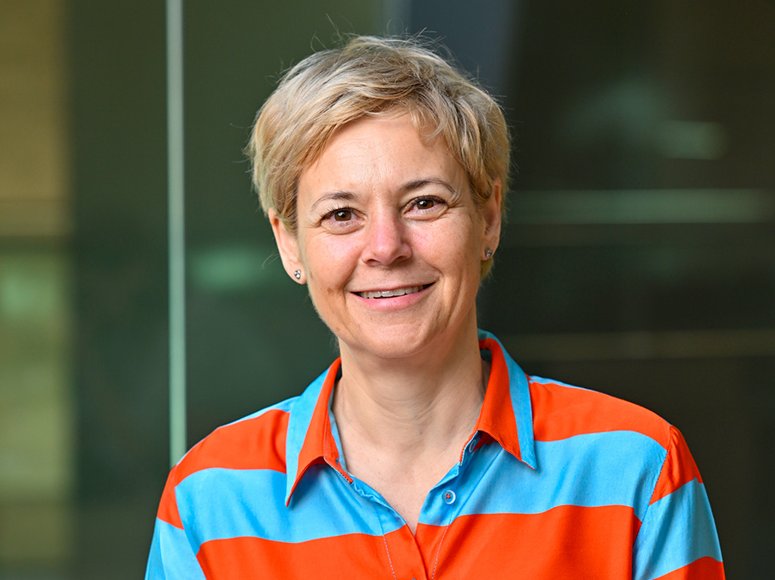
- Mag.a Michalea Gollner, MSc
- Evelin Haimburger, Ph.D., M.S.
- Viktoria Scariano, B.Sc., M.Sc.
- Anna Suppnig, B.Sc., M.Sc.
- Christoph Werginz, B.Sc.
On Foot
From Klagenfurt Central Station, you can reach the campus “Klagenfurt Mitte” in about 25 minutes on foot (2.5 km). The route takes you across the station plaza toward the city center and then along St. Veiter Straße to the grounds of the Klagenfurt Regional Hospital.
From the Heiligengeistplatz bus station, you can reach the campus in about 15 minutes (1.2 km) on foot. The route takes you along Wiesbadener Straße toward Neuer Platz, then continues along Kramergasse, Alter Platz, and Wiener Gasse to Heuplatz. From there, continue along St. Veiter Straße. After about 600 m, you’ll find the entrance to the Klagenfurt State Hospital grounds on your left.
The university building is marked as Building No. 24 on the Klagenfurt State Hospital map.
By public transportation
From Klagenfurt Central Station, you can reach the campus by taking line A or 4 to the “Morogasse” stop. From the station building, turn left toward the bus station.
Lines A and 4 also take you to the campus from the Heiligengeistplatz bus station.
By car
Coming from Villach or Wolfsberg, take the A2 Südautobahn and the Klagenfurt Nord bypass to the Klagenfurt Nord/Feldkirchen exit. Then follow Feldkirchner Straße toward the city. At St. Veiter Ring, turn left, and then turn left again at the intersection with St. Veiter Straße. After about 600 m, you’ll see the entrance to the Klagenfurt State Hospital grounds on your left. The university building is on the left.
Coming from St. Veit, you can reach the campus via the S37 Klagenfurt Expressway, which leads directly onto St. Veiter Straße. Follow the road until you reach the entrance to the Klagenfurt State Hospital grounds. Our university building is on the left.
By Plane
There are several airports in the area to choose from:
- Klagenfurt: approx. 10-minute drive
- Ljubljana (Slovenia): approx. 1 hour 10 minutes by car
- Graz: approx. 1 hour 30 minutes by car
- Salzburg: approx. 2 hours 30 minutes by car
- Trieste and Venice (Italy): approx. 2 to 3 hours by car
- Vienna: approx. 3 hours 30 minutes by car
- Munich: approx. 4-hour drive
The rest of the journey to the “Klagenfurt Mitte” campus is then made by train, bus, taxi, or car.