

MSc in Communication Engineering
Master's Program
Would you like to expand your technical knowledge and help shape the communication technologies of the future? Then the English-language master’s program in Communication Engineering is just right for you.
You’ll explore modern communication technologies and cutting-edge topics such as 5G mobile communications, cloud and edge computing, the Internet of Things (IoT), and the fundamentals of cybersecurity. You’ll plan and manage optical and wireless communication networks, expand your programming skills in Python, and develop solutions for modern cloud, edge, and IoT architectures.
In this way, you’ll develop the skills to design modern communication systems, monitor technical computer networks, and efficiently and securely design the digital infrastructure of companies and institutions.
Building on Technical Knowledge
This master's program is designed for graduates of technical bachelor's degree programs who wish to deepen their knowledge in the field of modern communications and network technologies.
Studying in English
All courses are taught in English. This allows you not only to deepen your technical expertise but also to strengthen your professional communication skills in an international setting.
Study & Work
Thanks to the work-friendly schedule, with classes starting at 4:50 p.m., you can perfectly balance your studies and your career and apply what you learn in a real-world setting at the same time.
Are you ready to connect the digital world?
Then develop the communication solutions that will make our connected future possible.
Key Features of the Program
Modern communication technologies are evolving rapidly and form the foundation of the digital transformation. In the Communication Engineering master’s program, you’ll deepen your technical expertise and explore cutting-edge technologies, real-world applications, and complex communication systems.
Shaping Digital Communication
You’ll work with cutting-edge communication technologies such as 5G mobile communications, cloud and edge computing, the Internet of Things (IoT), cybersecurity, and optical and wireless networks. This means you’ll be working with technologies that are already shaping digital communication today.
Programming for Modern Networks
You'll expand your Python programming skills and apply them to cloud, edge, and IoT architectures. At the same time, you'll develop solutions for network management, automation, and modern communication systems.
A Practical Path to a Master's Degree
Practical projects, lab exercises, and case studies prepare you for the challenges of modern communication technology. Together with other students, you’ll develop solutions to real-world problems and learn to approach technical issues from different perspectives.
Optical and Wireless Networks
You'll explore modern communication systems—from optical fiber networks to wireless network technologies—and learn how to plan, administer, and further develop them.
Connecting the Cloud, Edge, and IoT
Cloud computing, edge computing, and the Internet of Things are closely intertwined in modern communication systems. During your studies, you’ll learn how to integrate these technologies and apply them to various applications.

Details about the program




Info Box
Level of qualification
Master
ECTS credits
120
Tuition fees*
€ 363.36 / Semester
ÖH (Austrian Student Union) fee
€ 26.20 / Semester
Qualification awarded
Master of Science in Engineering
Duration of study
4 Semester
Language of instruction
English
CU Campus
Klagenfurt
Dates Info Box
Winterterm 2026
Period I: 01.11.-15.03.26
Period II: 16.03.-15.05.26
Period III: 16.05.-15.07.26
Period IV: 16.07.-30.09.26*
Due to lengthy visa processes, applications from Africa, the Middle East and South, East, and Southeast Asia only in Period I.
*We reserve the right to close this period early.
The semester starts in October - we only offer intake in winterterm!
The start of lectures can be found in the individual timetable which is available after enrollment.
Monday to Friday:
16:50 till 20:10
Occasionally Saturday:
08.30 - 16:00 (classroom teaching with online parts)
An overview on our upcoming events can be found here.
You are interested in a personal (online) study consultation or would like to receive more information on the degree program? Click on the buttons below this checkbox to learn more.
Language of Instruction: English (min B2)
Application essentials:
More information on the application process, admission requirements and necessary documents can be found here.
* Tuition for non-EU/EEA citizens: €500 + €26.20 ÖH fee (per semester)
FAQ
Frequently asked questions about the Master’s Degree Program in
“Communication Engineering”
What bachelor's degree do I need to get started?
The master’s program is designed for graduates of technical bachelor’s degree programs. Whether your prior education meets the academic admission requirements will be assessed on a case-by-case basis as part of the admissions process.
Do I need prior knowledge of communication technology?
No. This program builds on a technical bachelor's degree. Specific knowledge of communication networks or network technologies is helpful, but it is specifically deepened and expanded upon in the master's program.
Where do communication engineers work?
Communication engineers work in private and public companies, telecommunications firms, and research and development institutions. The accelerating pace of digitalization is opening up career opportunities in a wide variety of industries.
Insights into the Program
Students, graduates, and faculty members share firsthand accounts of the Master’s degree program in Communication Engineering, daily life as a student, and their experiences at CU Carinthia University of Applied Sciences.



Book an online information session
During the online information sessions, the program directors or academic directors provide detailed information about the program. Topics include course content, internships, admission requirements, and potential career prospects.
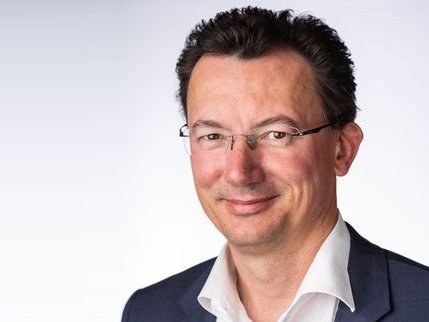
Simon Grasser, B.Eng., MBA
Engineering & IT
s.grasser(at)cuas.at
Research and Teaching Facilities
The laboratories at CU Carinthia University provide a modern infrastructure that supports hands-on learning and innovative research. Equipped with state-of-the-art technologies and specialized equipment, they enable students and researchers to work on projects across a wide range of fields, including engineering, computer science, business, and health.
The laboratories are designed to meet current industry standards and requirements, providing an ideal environment for developing new ideas, technologies, and solutions.
INFORMATION & APPLICATION
Virtual Campus Tour
Contact
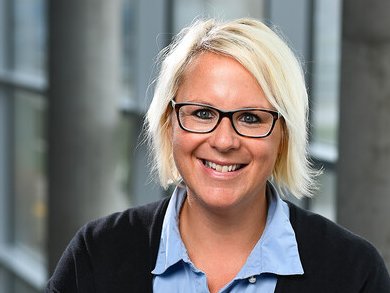
Michaela Filippitsch, M.A.
Administration
+43 5 90500 3101
m.filippitsch(at)cuas.at
On foot
From Klagenfurt Central Station, you can reach the campus in about 20 minutes on foot (1.7 km). The route takes you east along Bahnstraße and then along Gerberweg to the campus.
By public transportation
From Klagenfurt Central Station, take Line A to the “FH Kärnten” stop operated by Stadtwerke Klagenfurt. From the station building, turn left toward the bus station.
By car
Coming from the west—for example, via the A10 Tauern Autobahn or A11 Karawanken Autobahn—take the A2 Südautobahn to the Klagenfurt/Wörthersee exit. Then follow the Südring for about 7 km and turn toward the city center at the Südring/Gerberweg intersection. After about 150 m, turn right toward the campus.
If you’re coming from the east, take the Klagenfurt-Ost exit on the A2 Südautobahn. Then drive toward Klagenfurt-Zentrum, continue along Völkermarkter Straße, and then turn left onto the Südring. At the Südring/Gerberweg intersection, turn toward the city center and, after about 150 m, turn right toward the campus.
Coming from the south, you can reach the campus via the B91 Rosentaler Straße. At the Rosentaler Straße/Südring intersection, turn onto the Südring and follow it for about 2.5 km to the Südring/Gerberweg intersection. There, turn toward the city center and, after about 150 m, turn right toward the campus.
Coming from the north, drive toward the city center on the B83 St. Veiter Straße until you reach the St. Veiter Straße/St. Veiter Ring intersection. Then follow St. Veiter Ring, then Völkermarkter Ring, and continue on Lastenstraße until you reach Gerberweg. After about 750 m, turn left toward the campus.
By Plane
There are several airports in the area to choose from:
- Klagenfurt: approx. 15-minute drive
- Ljubljana (Slovenia): approx. 1 hour 10 minutes by car
- Graz: about 1 hour and 30 minutes by car
- Salzburg: approx. 2 hours and 30 minutes by car
- Trieste and Venice (Italy): approx. 2 to 3 hours’ drive
- Vienna: approx. 3 hours 30 minutes drive
- Munich: approx. 4 hours 15 minutes travel time
The rest of the journey to the Klagenfurt Primoschgasse campus can then be completed by train, bus, taxi, or car.