

The Sunflower under the Microscope
As part of the search for climate-resilient plant varieties, CU is participating in research on sunflowers.
One might think that sunflowers, of all plants, would be best able to withstand this summer’s heat. After all, they thrive even in soils that retain very little water. But in this case, the name doesn’t live up to the reality - the estimated harvest for this season is down by 35 to 50 percent, with significantly less than 1,000 kilograms of sunflower seeds per hectare. And this is for a plant that generally copes well with dry climatic conditions. But in 2026, even for this sun-loving plant, there was too much of a good thing and too much heat.
This harms not only agriculture but also biodiversity: A research team led by environmental geneticist Vid Švara at CU Carinthia University has demonstrated that sunflowers interact with up to 200 different animal species and organisms. “Sunflowers are an important food source for animals. They provide pollen and nectar for pollinators such as bees, butterflies and wasps,” says Švara, who succeeded in identifying the species that interact with sunflowers using a method he developed himself.
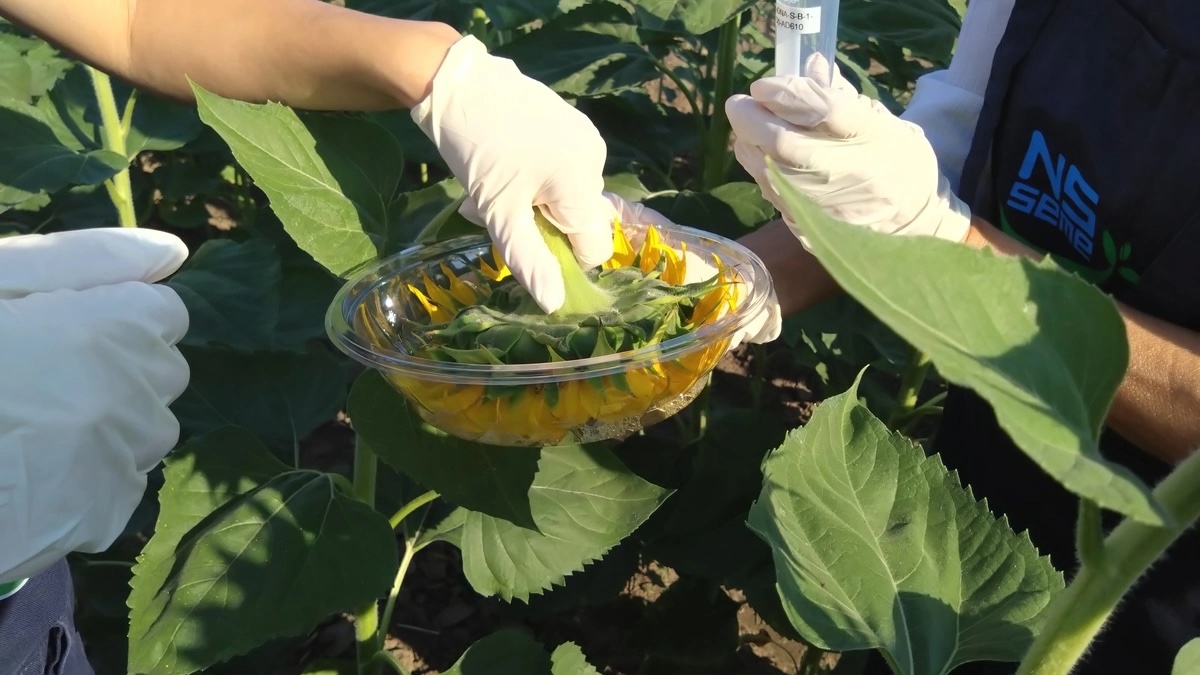
To do this, Švara detected traces of genetic material on the heads of the sunflowers. “Saliva, feces, scales and skin - all of these contain DNA. By washing the flower heads with special solutions, this information can be preserved and analyzed in the lab. This way, we can ultimately determine exactly which species visited which flower and at what stage of growth.”
The accuracy of this method was confirmed using insect traps and camera images, so it is now being applied throughout Europe as part of the HelEx project. This EU-funded research initiative aims to advance climate-resilient plant species and test them in real-world cultivation settings. As a project partner, the CU is responsible for investigating the effects of the new cultivars on pollinators and consequently, on biodiversity in the plants’ surroundings. “We’re interested in whether these new hybrid plants attract a greater variety of organisms and whether this varies in countries with different climatic conditions,” says Švara. At the end of the project, these findings will inform the decision regarding which sunflowers are particularly suitable for future cultivation in a Europe that faces major challenges due to global warming.

Sunflowers are an important food source for pollinators such as bees, butterflies and wasps.
This page is published in cooperation with the Carinthian Higher Education Conference. Editorial responsibility lies solely with the “Kleine Zeitung.”