

When Is 3D Printing Truly Sustainable?
Not every component automatically becomes more sustainable through 3D printing. That is precisely why the Interreg project ADDCIRCLES investigated when additive manufacturing can be used in a technically, economically and environmentally meaningful way. As the project comes to an end, CU Carinthia University of Applied Sciences, together with its partners from Austria and Slovenia, takes stock of the results.
Over the past years, the ADDCIRCLES project has developed new approaches to more sustainable additive manufacturing and tested them in research, education and practice.
The results include the development and testing of sustainable materials, an Eco-Design Toolkit for more environmentally responsible product development, as well as practical business cases.
These realistic use cases were particularly important to the project. “It was important to us not to present additive manufacturing as the better solution by default. The business cases were intended to use reliable data to demonstrate when 3D printing makes sense from a technical, economic and environmental perspective – and when it does not,” says Mathias Brandstötter, Head of the ADMiRE Research Center at CU Carinthia University of Applied Sciences.
Sharing Knowledge
In addition to technological development, sharing the knowledge gained through the project also played an important role. The project partners explored different teaching and learning methods in workshops and integrated them into new educational offerings. These included a six-module Green AM Moodle course and a certificate course in additive manufacturing. The aim is to ensure that the knowledge and insights gained through the project continue to be incorporated into teaching and continuing education beyond the project’s duration.
Cross-Border Collaboration
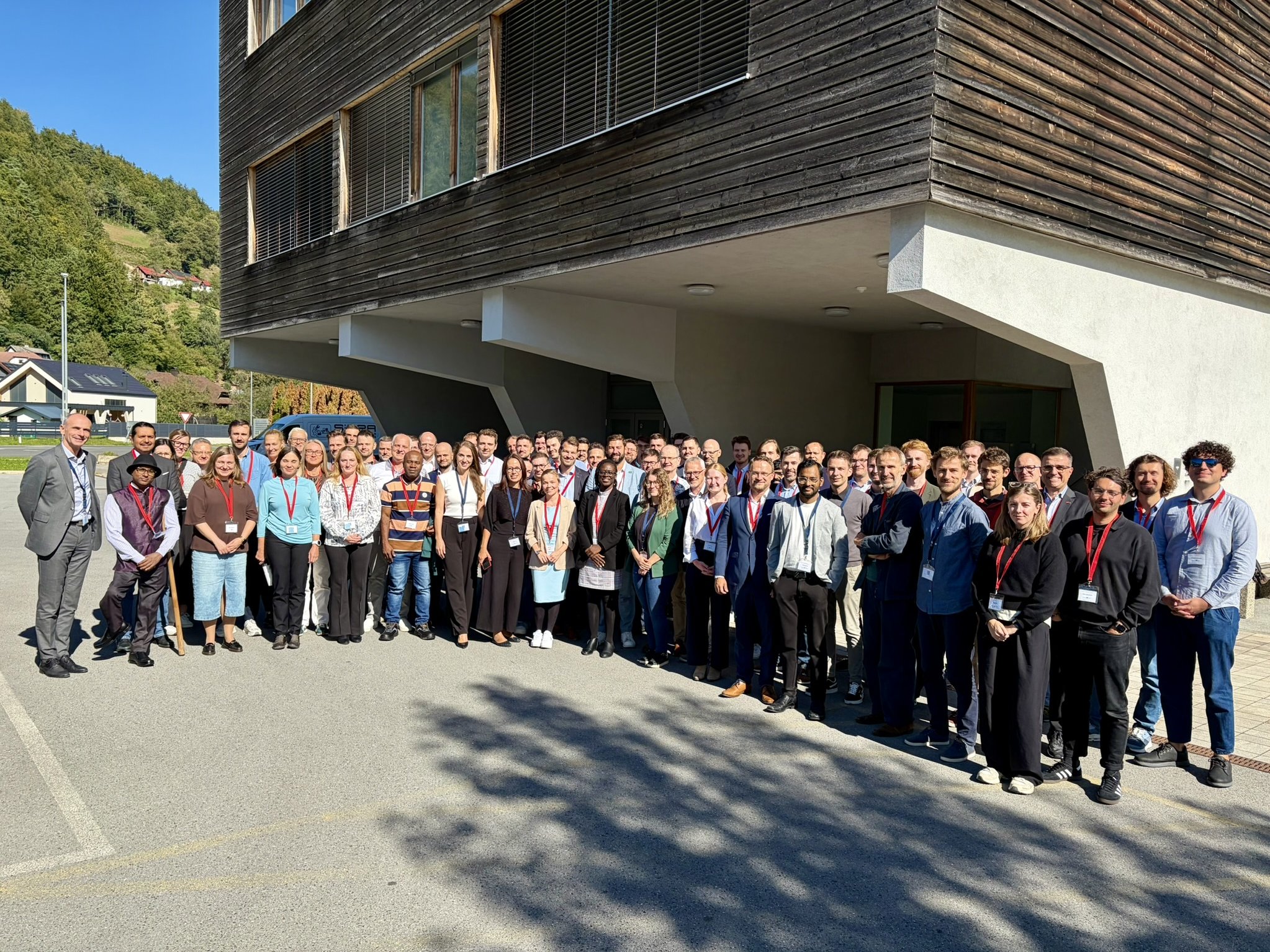
The project concluded with AM Connect 2026, held on September 23 and 24 in Slovenj Gradec. Experts from research, education and industry came together to discuss new materials, sustainable production approaches and current developments in additive manufacturing.
“AM Connect shows how much can emerge from personal exchange. Our collaboration with our partners in Slovenia has become so natural that the border is hardly noticeable in our joint work anymore. We want to continue expanding this network after the project ends,” says Sandra Schulnig, Group Leader for Additive Manufacturing at the ADMiRE Research Center at CU Carinthia University of Applied Sciences.
The formal end of the project therefore does not mark the end of the collaboration. The content and knowledge developed through the project will continue to be used in courses, continuing education programmes and new European projects.
Cross-border exchange will also continue: the next AM Connect will take place on December 1 and 2, 2027, at CU Carinthia University of Applied Sciences in Villach.
Foto: Sara Jeseničnik, Faculty of Polymer Technology - Slovenj Gradec