

Management of Conservation Areas – MSc
Master’s Program in Protected Area Management, Biodiversity Conservation, and Conservation Leadership
Successfully Designing Protected Areas—for Nature, People, and the Future. Protected areas are among the most important tools for biodiversity conservation and sustainable regional development. At the same time, they face complex challenges: nature conservation, societal interests, and economic development must be balanced.
The international, part-time Master’s program in Management of Conservation Areas prepares you to professionally plan and manage protected areas. You’ll develop skills in protected area management, conservation leadership, and sustainability, and learn to integrate ecological, social, and economic perspectives into decision-making.
Through the program’s international focus, close collaboration with experts, and courses held directly in protected areas, you’ll combine academic foundations with practical application and prepare yourself for responsible roles in international nature conservation.
Protected Area Management
You will learn how to plan, manage, and sustainably develop protected areas in a holistic manner.
Biodiversity Conservation
Combine ecological, social, and economic perspectives to protect biodiversity in the long term.
Conservation Leadership
Develop skills in leadership, communication, stakeholder management, and participatory processes in international conservation.
Shape the future of protected areas.
Expand your professional and international skills and gain the qualifications needed to take on leadership roles in the management of protected areas worldwide.
Special Features of the Program
International Protected Area Management
You’ll study alongside participants from various countries and benefit from exchanges with international experts and professionals. The diverse range of experiences and perspectives will prepare you to manage protected areas in a variety of international contexts.
Biodiversity Conservation in Practice
Part of the in-person instruction takes place directly in protected areas in Central Europe. There, you will apply scientific methods directly in the field, analyze real-world challenges, and work together to develop solutions for the management of protected areas.
Environmental Governance & Sustainability
Successful management of protected areas requires consideration of ecological, social, and economic perspectives. You will address diverse interests and develop sustainable solutions to complex issues in environmental governance.
Research, UNESCO, and International Projects
The master’s program is closely linked to research and international projects in the fields of nature conservation and sustainable development. Through the UNESCO Chair and the ICEB Research Institute, you’ll gain insights into current scientific issues, international developments, and specific projects.
- About the UNESCO Chair
- About the ICEB Research Institute
Details About the Program



Info Box
Level of qualification
Master
ECTS Credits
120
Tuition fees
€ 3725.- / Semester
ÖH (Austrian Student Union) fee
€ 26.20 / Semester
Info Box
Qualification awarded
Master of Science (Continuing Education) - MSc (CE)
Duration of study
4 Semester
Language of instruction
English
Location
Online, with one intensive week on campus per semester
Dates Infobox
- Applicants from Europe: January 15, 2026
- Applicants outside Europe: November 15, 2026
The program begins once a year in the fall.
The program is designed to be taken while working and lasts four semesters. Each semester includes two to three weeks of in-person instruction. These are supplemented by e-learning modules, making it easy to balance the program with a full-time job. The in-person instruction takes place in various protected areas in Central Europe.
Learn more about the program at an information session.
Are you interested in a personal (online) academic advising session, or would you like more information about the program? Schedule an appointment at the Info Center.
The program is taught entirely in English and is designed for individuals with a relevant bachelor’s degree, excellent English skills, and an interest in the management of protected areas. If you have any questions, the program team will be happy to assist you personally.
Important information about the application:
For more information on the application process, admission requirements, and the required documents, please see “WhatYou Need to Know About the Application.”
FAQ
Frequently Asked Questions About
the Master’s Program in “Management of Conservation Areas”
What does "Conservation Areas" mean?
Conservation areas are defined as areas designated for the long-term protection of nature, biodiversity, and natural habitats. These include, for example, national parks and biosphere reserves, which make an important contribution to sustainable regional development.
Can I complete the degree program while working?
Yes. The program is designed to be taken while working. Each semester includes two to three weeks of in-person instruction, supplemented by e-learning. This makes it easy to balance the program with a current job.
What career opportunities does this degree program offer?
Graduates work around the world in nature conservation, environmental consulting, public administration, NGOs, research, and sustainability projects. Potential fields of work include nature conservation management, biodiversity, sustainability consulting, project management, and environmental policy.
Insights into the Program
Graduates and faculty members share first-hand accounts of the Management of Conservation Areas program at CU Carinthia University of Applied Sciences.
This list contains no blog posts.
News from the Program
Learn more about current projects, activities, and developments related to the Management of Conservation Areas program at CU University of Carinthia.
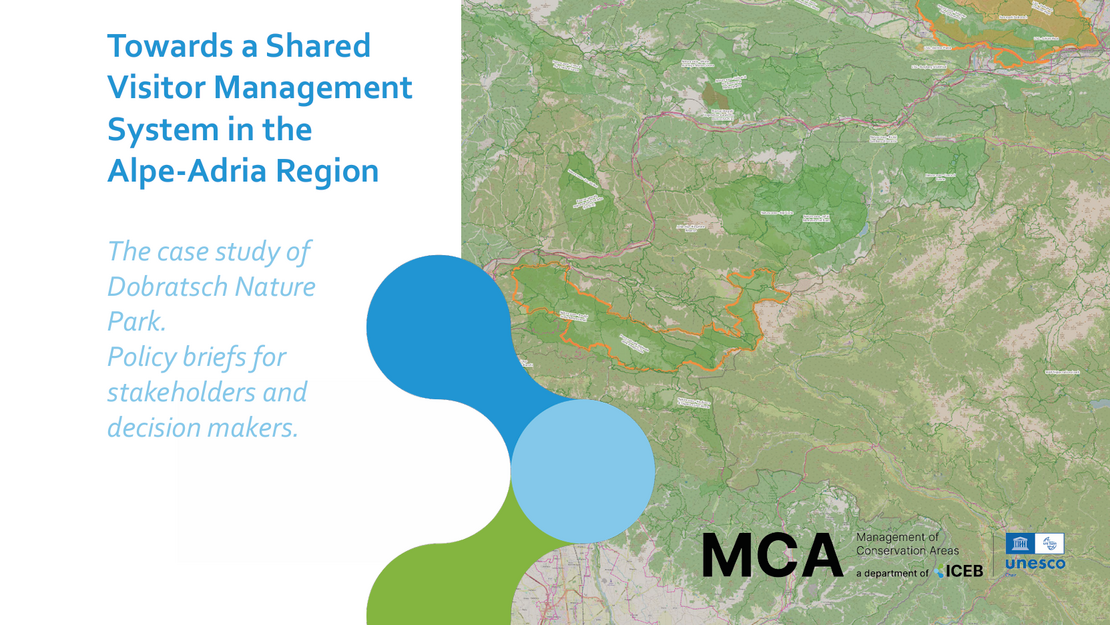
Policy Brief - Interreg Italy-Austria project INDIALPS
CU Carinthia University has published a policy brief on the Interreg Italy-Austria project INDIALPS. The initiative is dedicated to promoting…
Book an Online Information Session
Would you like to learn more about the program? In our online info sessions, we’ll introduce you to the program and answer your questions personally.
Melina Hierländer, B.A., M.A.
Educational Programs
Coordinator +43 5 90500 4305
m.hierlaender(at)cuas.at
Virtual Campus Tour
Contact
Melina Hierländer, B.A., M.A.
Educational Programs
Coordinator +43 5 90500 4305
m.hierlaender(at)cuas.at
On foot
From the Villach Seebach train station, you can reach the campus in about 20 minutes on foot (1.6 km). The route follows the Drau River to the campus.
By public transportation
The campus is directly accessible from Villach Central Station via bus lines 3 and 8 to the “Technologiepark” stop. From the Villach Seebach train station, you can also reach the campus by taking bus line 8 to the “Technologiepark” stop. The Villach city bus schedules are coordinated with the ÖBB schedules.
By car
Coming from Klagenfurt/Vienna, take the A2 Südautobahn to the Wernberg exit. From there, follow the B83 Kärntner Straße toward Villach for about 2 km, then follow the signs toward Magdalenen See or Technologiepark.
Coming from Salzburg/Munich via the A10 Tauern Autobahn, take the Villach/Ossiacher See exit and follow the B33 Kärntner Straße for about 2 km toward Wernberg/Klagenfurt. Then turn toward Magdalenen See and follow the road to the Technology Park.
There are several free parking spaces right in front of the building, and additional paid parking spaces are available in the surrounding area.
By Plane
There are several airports in the area:
- Klagenfurt: approx. 30-minute drive
- Ljubljana (Slovenia): approx. 1-hour drive
- Graz: approx. 2-hour drive
- Salzburg: approx. 2-hour drive
- Trieste and Venice (Italy): about 2 to 3 hours by car
- Vienna: about a 4-hour drive
- Munich: approx. 4-hour drive
From there, you can continue your journey to the Villach campus by train, bus, taxi, or car.
Team & Contact
FH-Prof. Mag. Dr. Michael Jungmeier
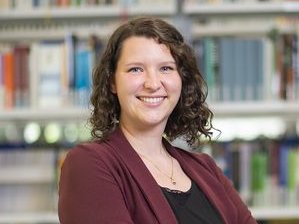
Elisabeth Wiegele, BSc, MSc
Coordination
+43 5 90500 5140
e.wiegele(at)cuas.at
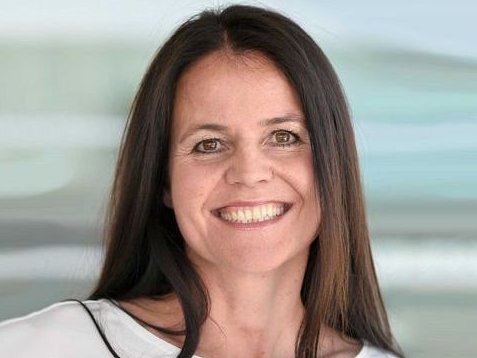
Mag. Alexandra Liegl.
Head of CU Academy
+43 5 90500 4311
a.liegl(at)cuas.at
Melina Hierländer, B.A., M.A.
Educational Programs
Coordinator +43 5 90500 4305
m.hierlaender(at)cuas.at