

RESEARCH UPDATES
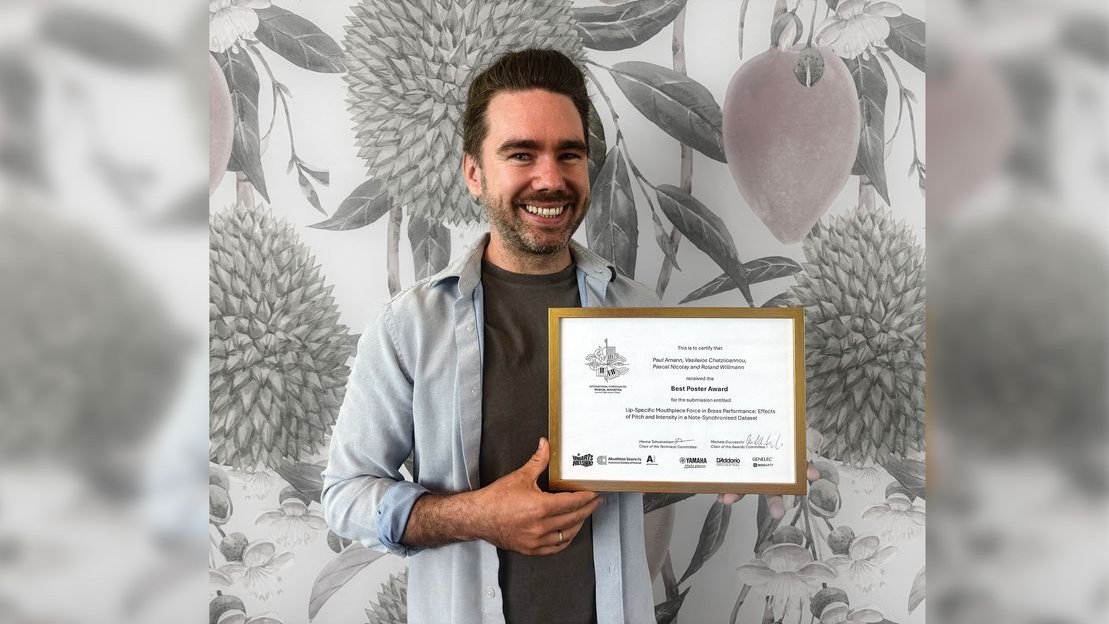
Poster Award at ISMA 2026 in Helsinki
At the International Symposium on Musical Acoustics (ISMA) 2026, held June 15–17, 2026, in Helsinki, Finland, under the theme “Sounds of the Past into…

Carinthia University of Applied Sciences Leads the European Flagship Project VET5.0
The Carinthia University of Applied Sciences is leading the European VET5.0 (Vocational Education and Training 5.0) project and, together with 25…

ALPS-RADAR – Intelligent Risk Assessment for Alpine Air Rescue
Air rescue operations in alpine regions face unique challenges. Complex weather conditions, challenging topography, and the increasing integration of…
Kleine Zeitung – Knowledge
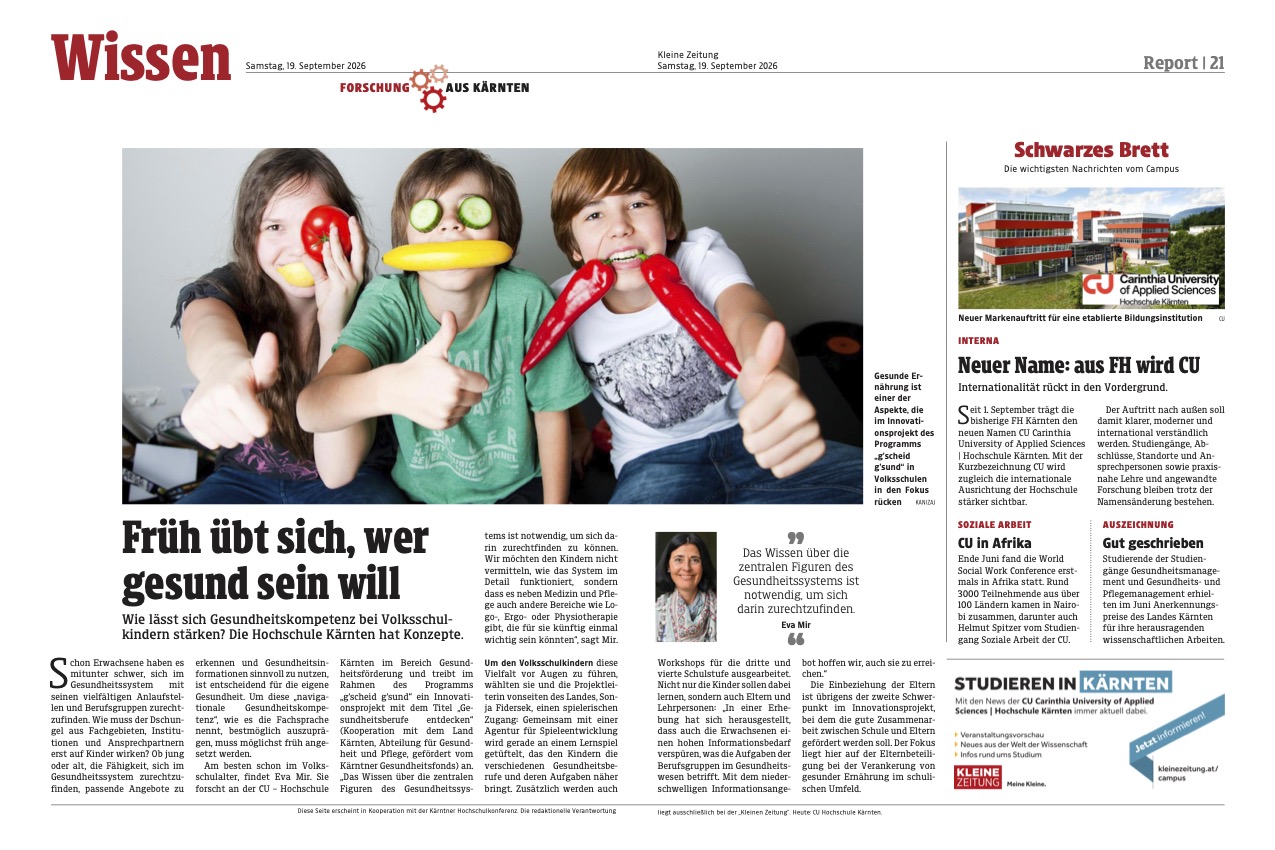 Saturday, September 19, 2026
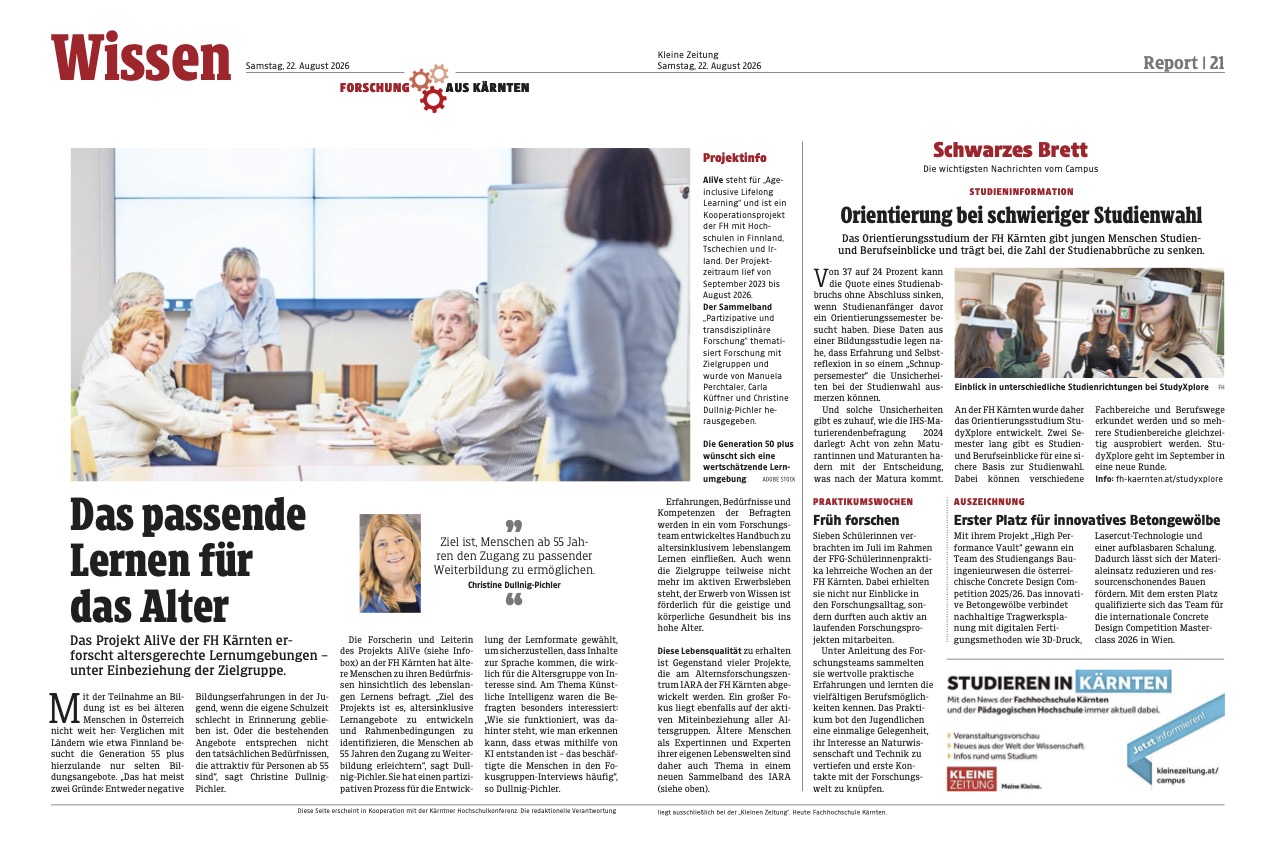 KnowledgeSaturday, August 22, 2026
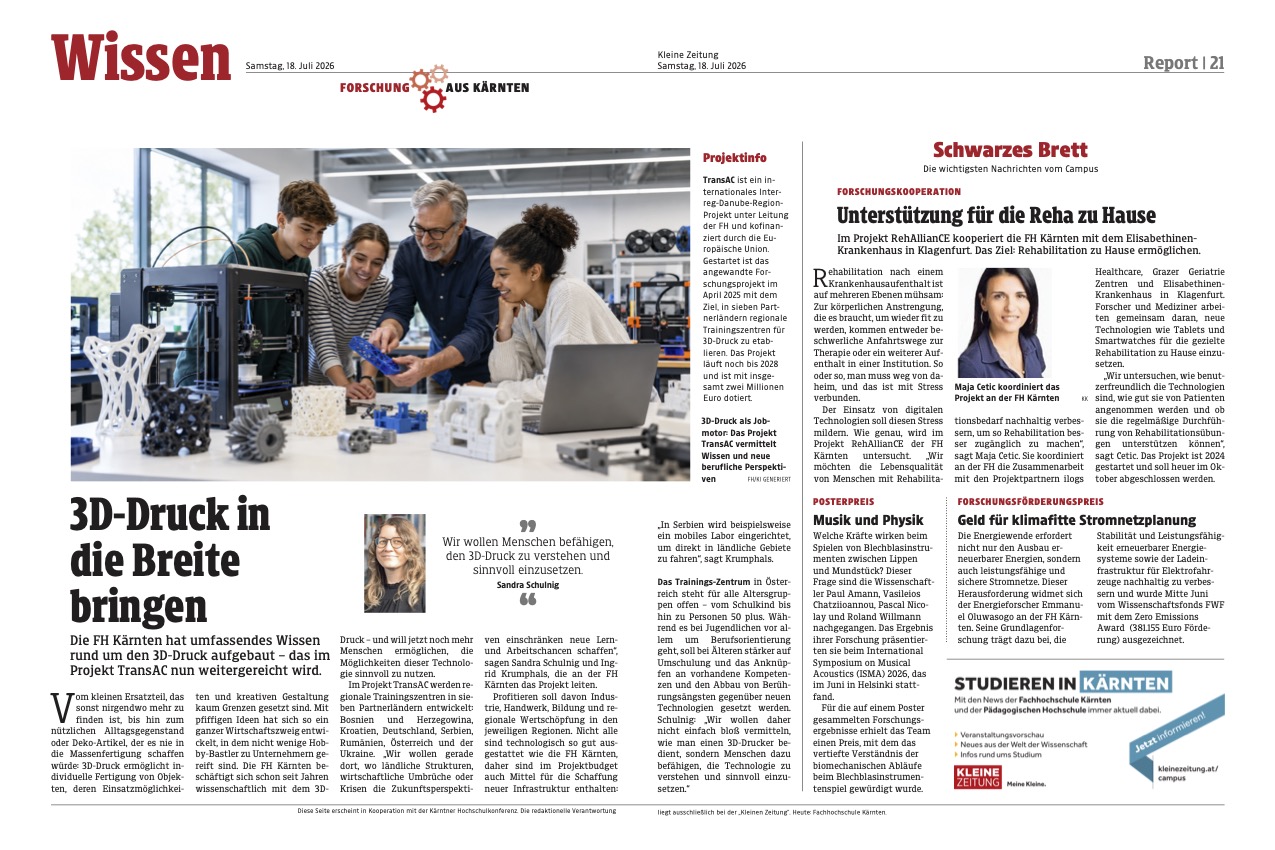 KnowledgeSaturday, July 18, 2026
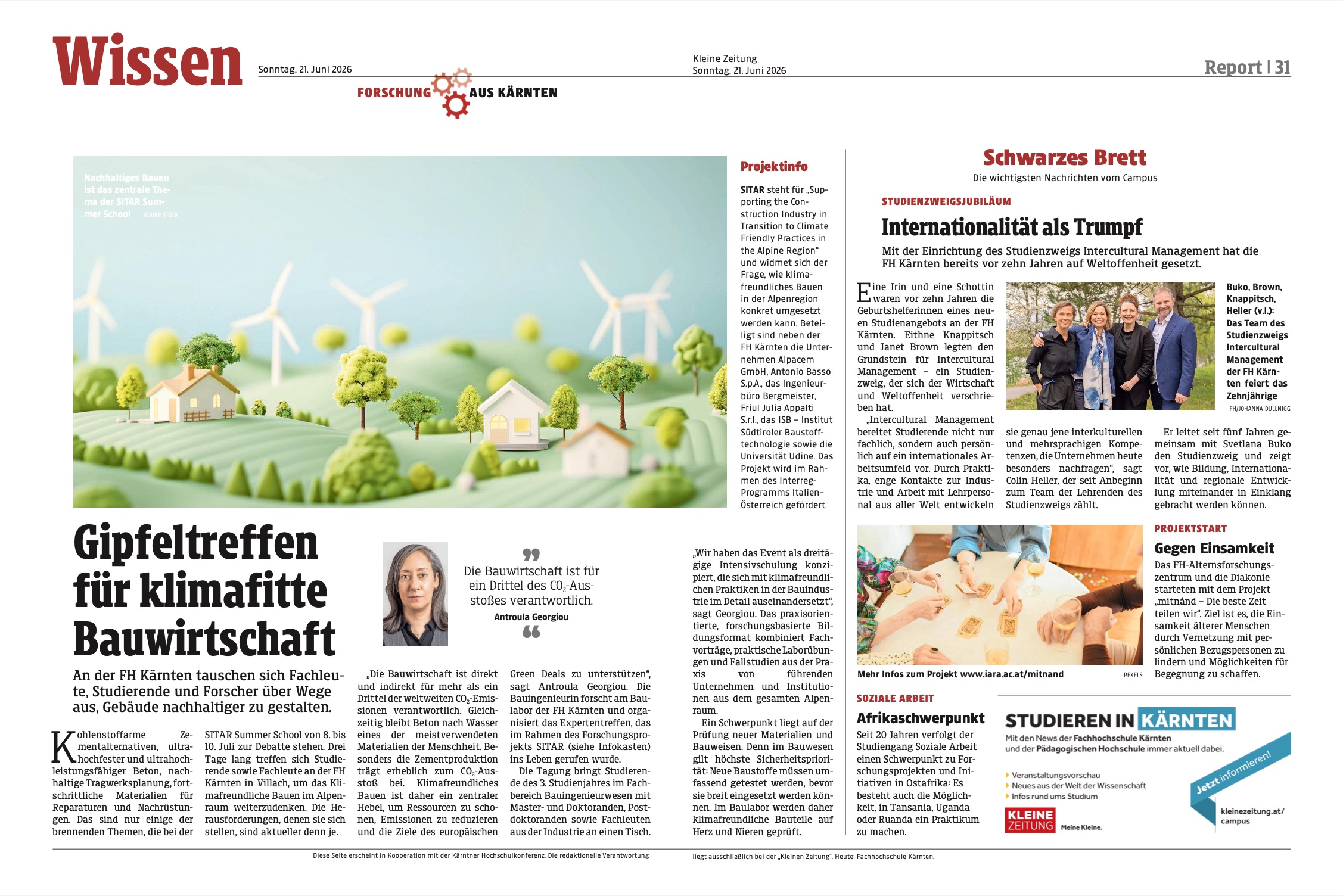 KnowledgeSaturday, June 21, 2026
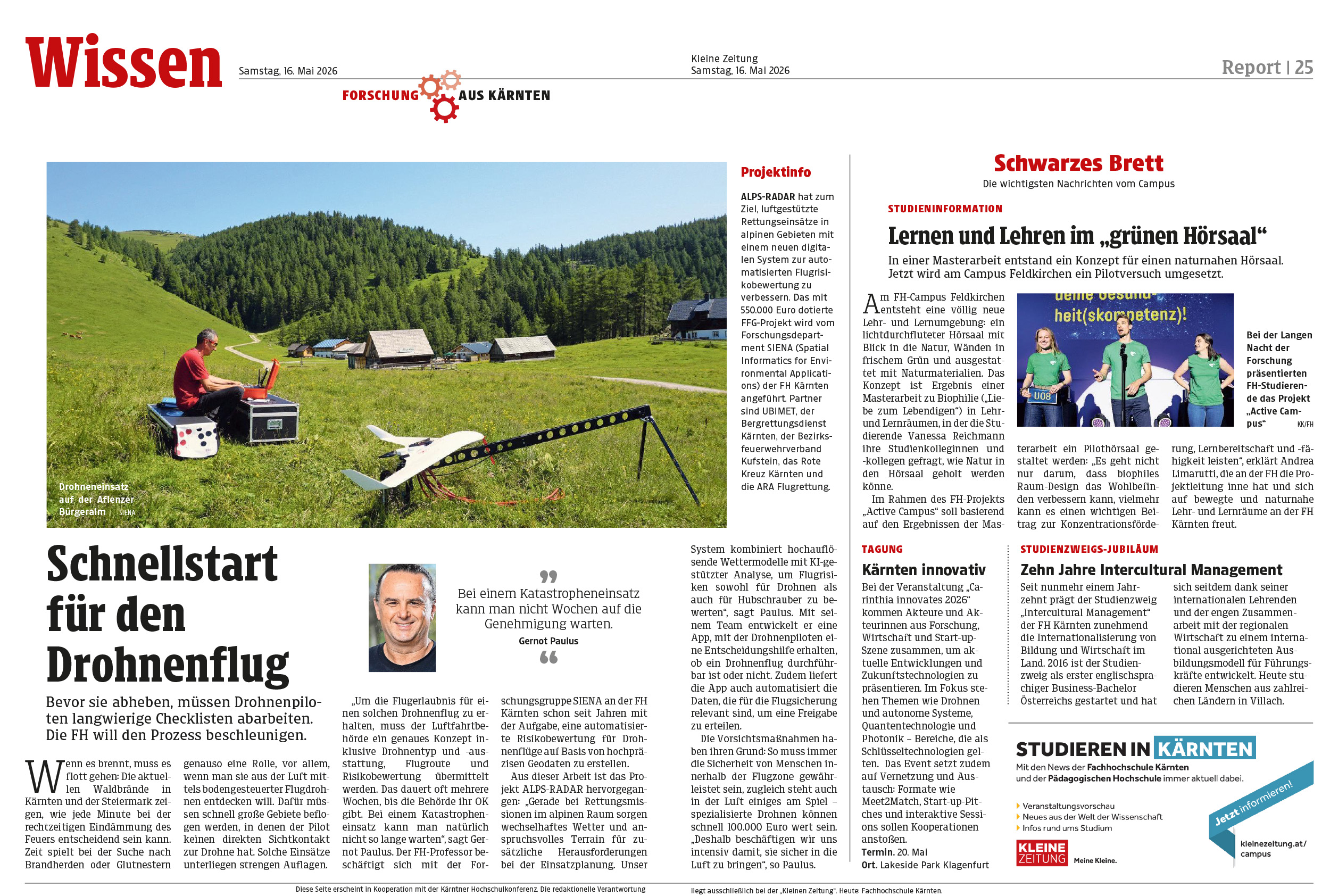 KnowledgeSaturday, May 16, 2026
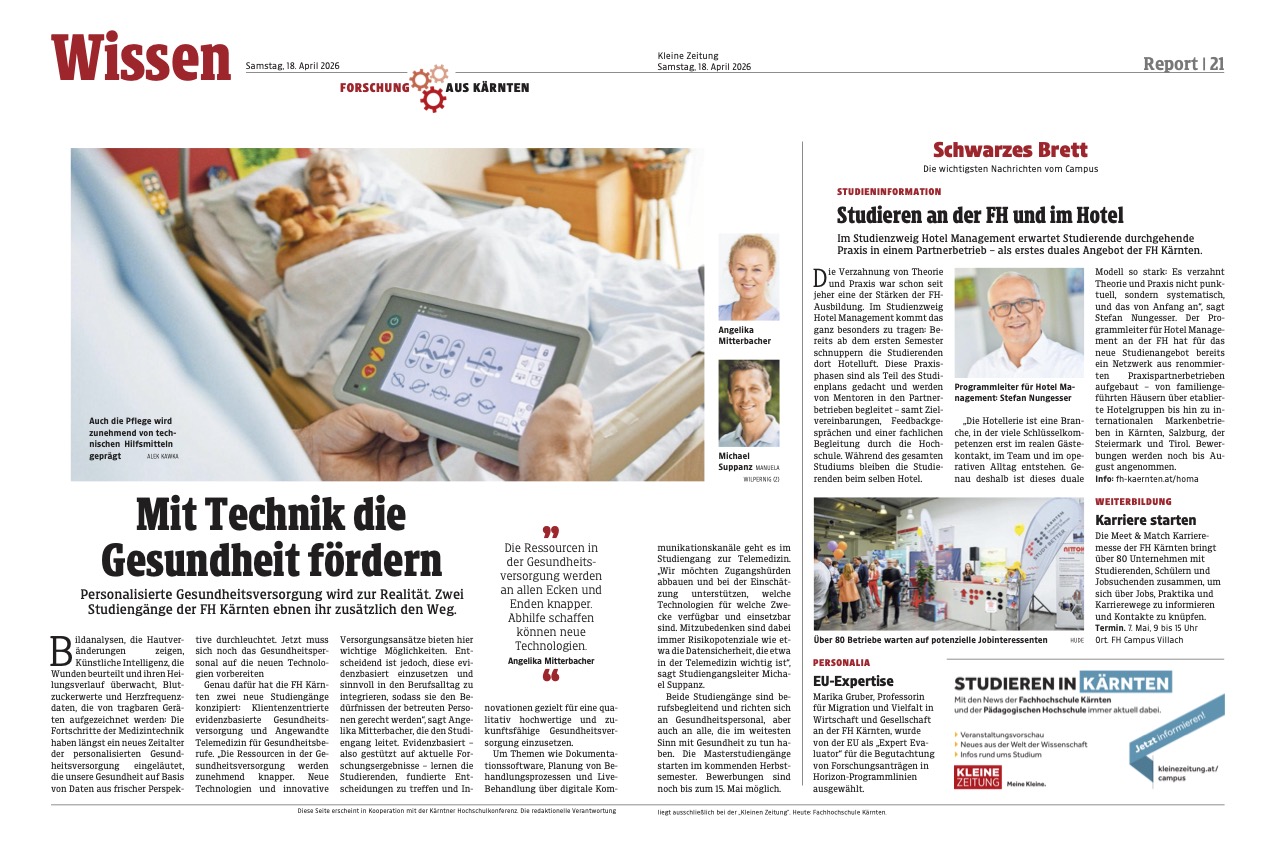 KnowledgeSaturday, April 18, 2026
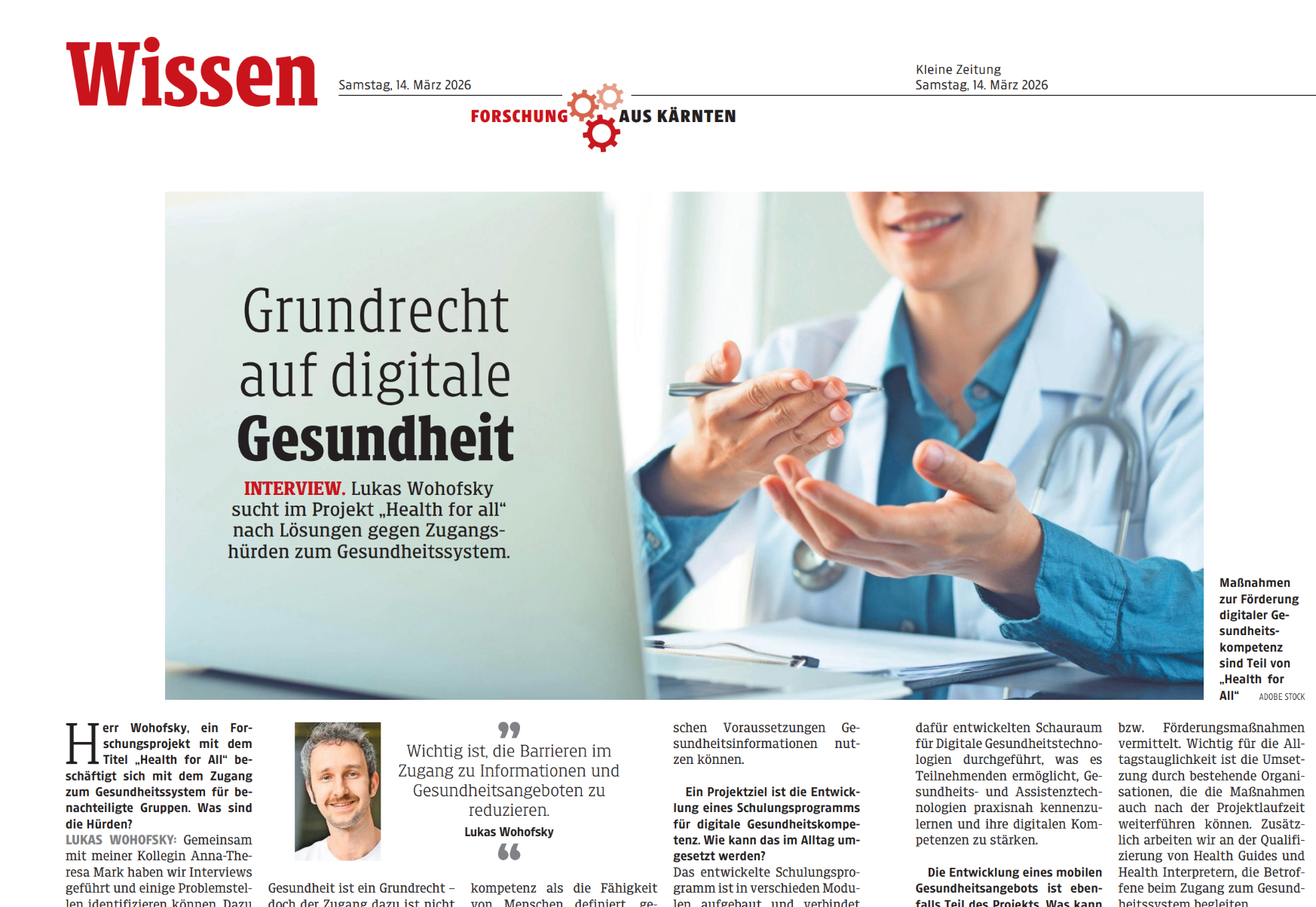 KnowledgeSaturday, March 14, 2026
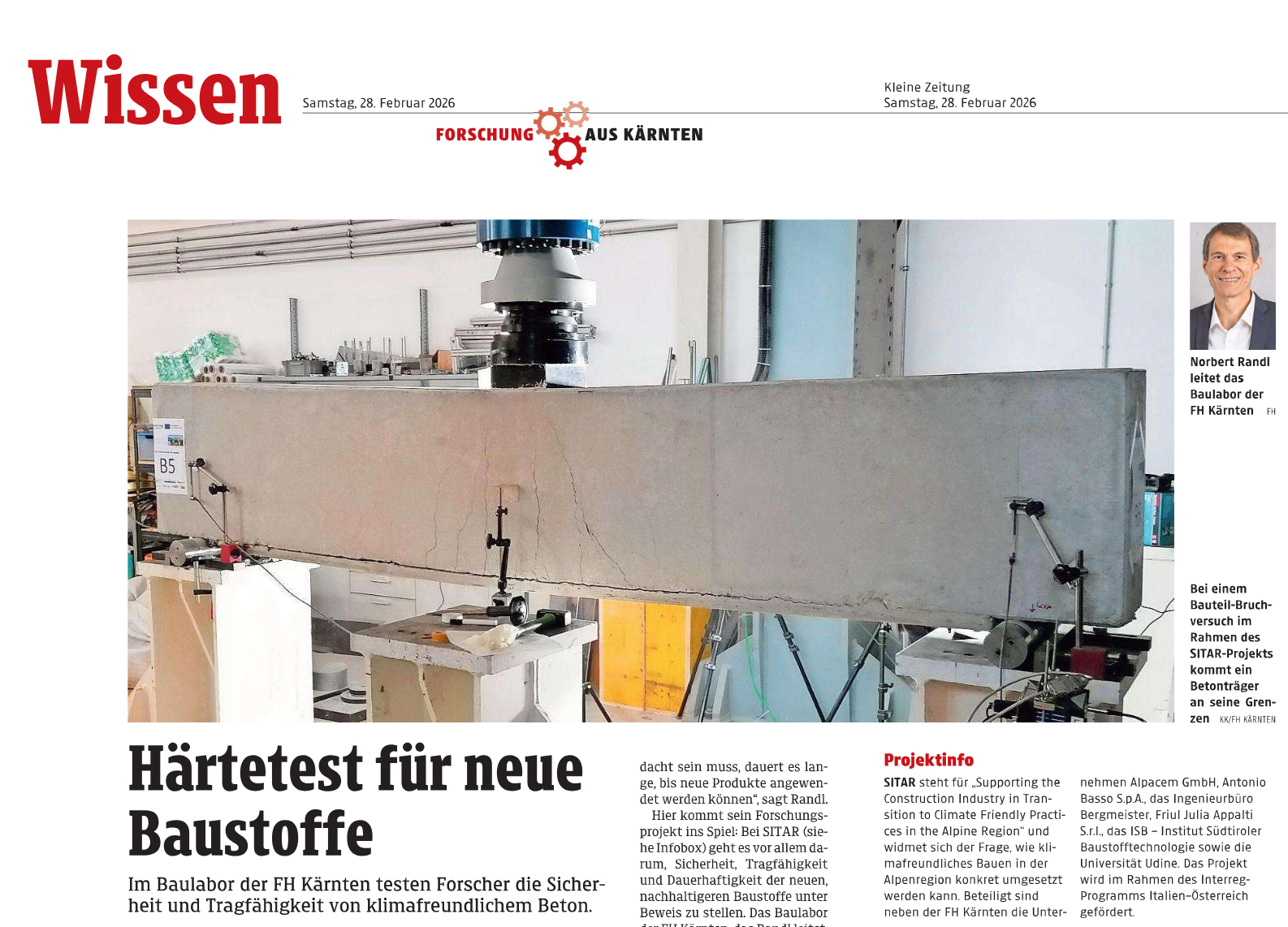 KnowledgeSaturday, February 28, 2026
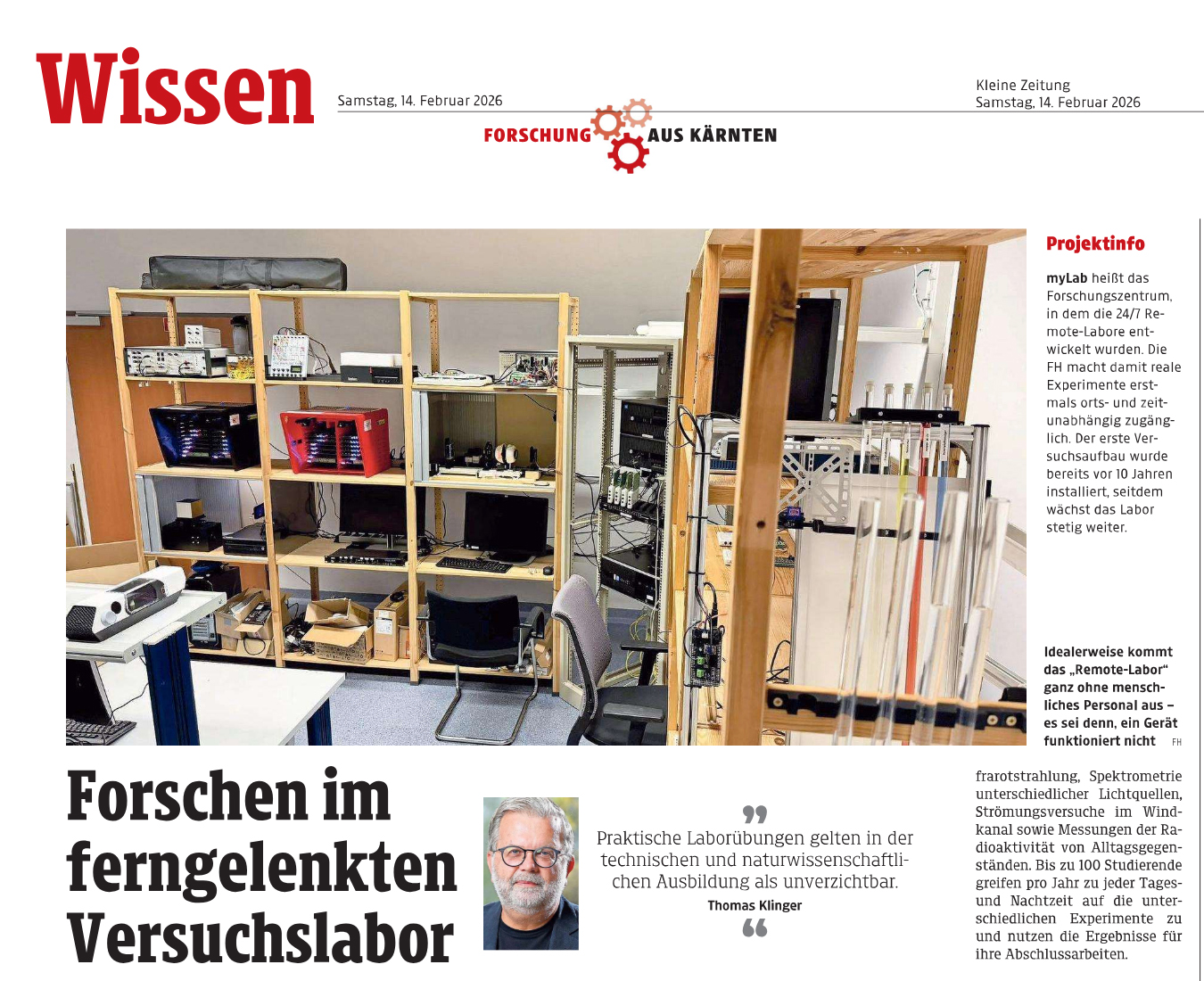 KnowledgeSaturday, February 14, 2026
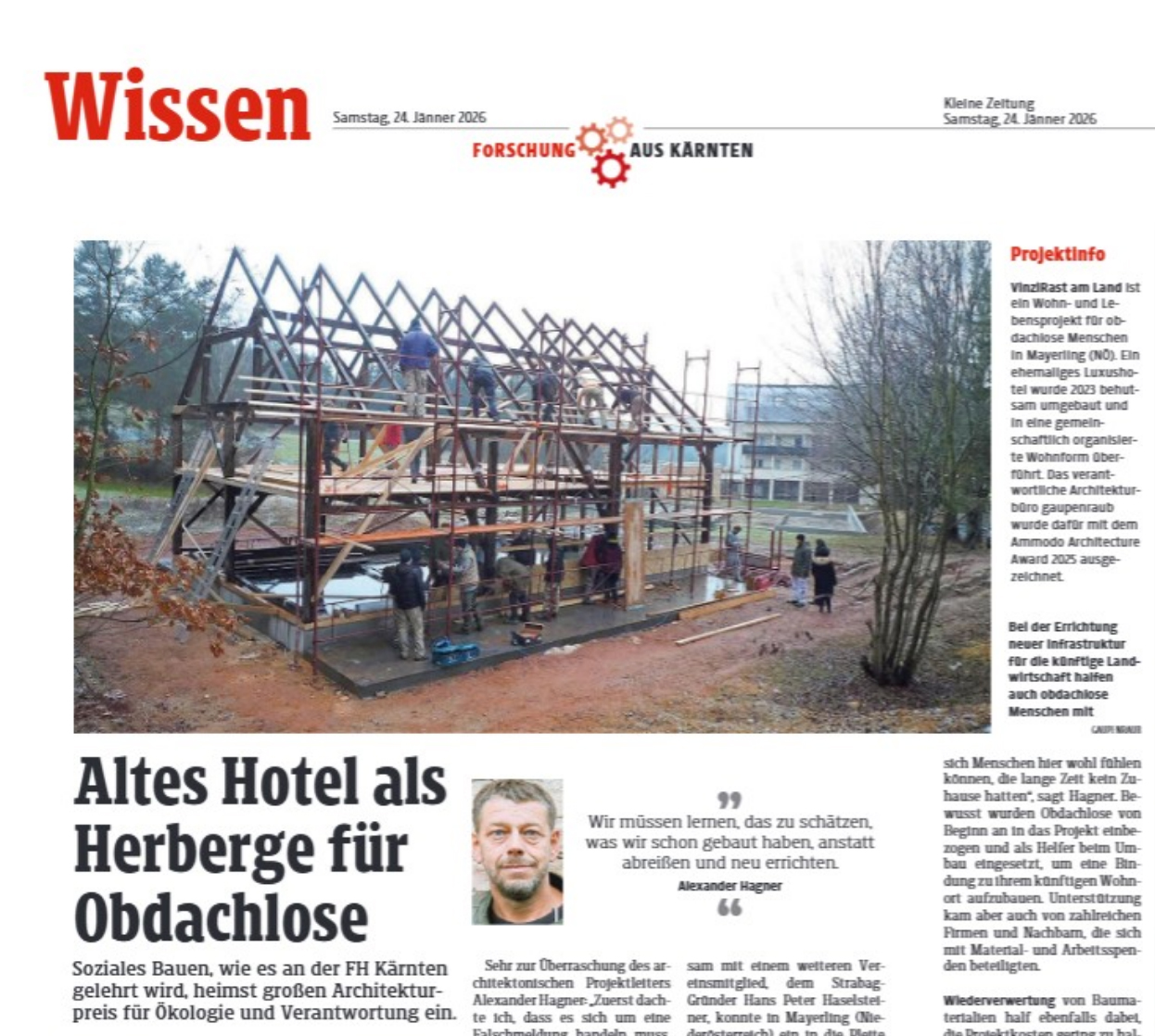 KnowledgeSaturday, January 24, 2026
KLEINE ZEITUNG – RESEARCH REPORTS

Fundamental Right to Digital Health
As part of the “Health for All” project, Lukas Wohofsky is seeking solutions to overcome barriers to accessing the healthcare system.
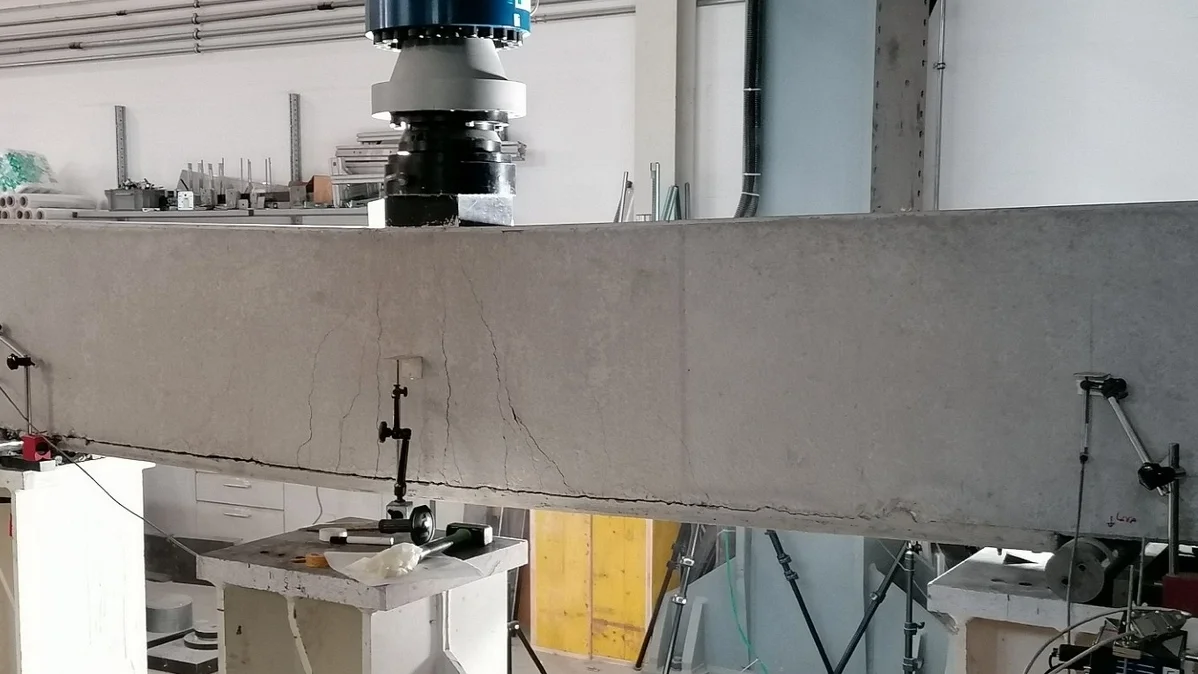
Endurance Test for New Building Materials
At the construction laboratory at CU Carinthia University of Applied Sciences, researchers are testing the safety and load-bearing capacity of…

Research in a Remote-Controlled Experimental Laboratory
CU Carinthia University of Applied Sciences has set up a laboratory that operates without staff. Experiments are initiated via the Internet.
SCIENCE COMMUNICATION
CU Carinthia University makes research accessible and brings it to life. The goal of science communication is to present the results of teaching and research clearly and accessibly–to students, academic colleagues, the business community, and the general public. Through transparent communication, knowledge is not only shared but also made accessible and brought into dialogue with society.
To this end, the university uses a variety of formats: publications, lectures, workshops, digital media, events, and social media channels all help to present complex content in an understandable way. Every form of communication follows the principles of precision, clarity, and responsibility. This fosters dialogue between researchers and society and encourages engagement with current issues and innovations.