

MSc in Medical Engineering & Analytics
Master's Degree Program
The English-language master’s program in Medical Engineering & Analytics at CU Carinthia University of Applied Sciences enables you to develop innovative solutions for diagnostics, therapy, and healthcare using methods such as artificial intelligence, augmented reality, and data analysis.
You’ll explore deep learning, signal and image processing, and assistive technologies, developing skills that are increasingly in demand in digital healthcare. Practice-oriented projects, state-of-the-art labs, and collaboration with companies and healthcare institutions will optimally prepare you to develop solutions for the healthcare of tomorrow.
AI and Data Analytics for the Healthcare Industry
In the Master's degree program in Medical Engineering & Analytics, you'll learn how AI, deep learning, and data analytics improve diagnostics, treatment, and decision-making in healthcare.
Flexible Learning with the HyFlex Model
Whether online, on campus, or asynchronously–the HyFlex model in the Master’s program in Medical Engineering & Analytics offers you maximum flexibility and allows you to balance your studies with your career and personal life.
Developing Smart Health Technologies
Develop solutions for medical technology, healthcare IT, and digital health, and gain the qualifications needed for specialist and leadership roles in the digital healthcare sector.
Shape the digital healthcare of tomorrow.
Develop smart technologies for diagnostics, therapy, and healthcare, and start your master’s program in Medical Engineering & Analytics today.
Special features of the program
From Research to Application
In the Master’s program in Medical Engineering & Analytics, you’ll work on real-world problems in research and healthcare and develop intelligent solutions for diagnostics, therapy, and medical decision-making. In doing so, you’ll apply methods such as deep learning, image and signal processing, and data analysis in a practical context.
Data Becomes Smart Applications
In this English-language master's degree program, you will analyze complex medical data and use it to develop intelligent applications for digital health and health informatics. Examples include diagnostic imaging for clinical imaging, the analysis of physiological signals, and the use of artificial intelligence to support clinical decision-making.
Practical Projects with Businesses and Research Institutions
You’ll tackle specific challenges in the healthcare sector—from AI-powered analysis of medical imaging data to assistive systems and augmented reality applications. In collaboration with companies and research institutions, you’ll apply cutting-edge technologies in projects and gain experience for your professional career. An international network spanning industry, research, and healthcare will support you along the way.
Develop ideas. Bring innovations to life.
In the Medical Engineering & Analytics master’s program, you’ll not only develop technological solutions but also learn how to turn them into innovative products, business models, or startups. Entrepreneurship modules will equip you with the necessary know-how to successfully implement your own ideas in the fields of medical technology and digital healthcare—all the way to launching your own startup.
Internationale Erfahrung sammeln
During your studies, you can spend a semester abroad at select partner universities. The International Relations Office will help you plan your stay abroad.


Details about the program




Info Box
Level of qualification
Master
ECTS credits
120
Tuition fees*
€ 363.36 / Semester
ÖH (Austrian Student Union) fee
€ 26.20 / Semester
Qualification awarded
Master of Science in Engineering
Duration of study
4 Semester
Language of instruction
English
CU Campus
Klagenfurt
Dates Info Box
Winterterm 2026
Period I: 01.11.-15.03.26
Period II: 16.03.-15.05.26
Period III: 16.05.-15.07.26
Period IV: 16.07.-30.09.26*
Due to lengthy visa processes, applications from Africa, the Middle East and South, East, and Southeast Asia only in Period I.
*We reserve the right not to open the period or to close it early.
The semester starts in October - we only offer intake in winterterm!
The start of lectures can be found in the individual timetable which is available after enrollment.
Monday - Thursday from 15:00h
Friday from 13:30 h
Approx. 2-3 Saturdays/semester
Hybrid participation either on-site or online and partially HyFlex
An overview on our upcoming events can be found here.
You are interested in a personal (online) study consultation or would like to receive more information on the degree program? Click on the buttons below this checkbox to learn more.
Language of Instruction: English (min B2)
Application essentials:
More information on the application process, admission requirements and necessary documents can be found here.
* Tuition for non-EU/EEA citizens: €500 + €26.20 ÖH fee (per semester)
FAQ
Frequently asked questions about the
“Medical Engineering & Analytics” Master’s Degree Program
Who is this master's program intended for?
The Master's program in Medical Engineering & Analytics is designed for graduates of technical or science degree programs who are interested in medical technology, artificial intelligence, data analytics, and digital healthcare.
Do I need prior knowledge of AI or data analytics?
No. A basic knowledge of technical or computer science subjects is helpful, but the specific methods used in AI, deep learning, and data analytics are systematically taught in the Medical Engineering & Analytics master’s program.
What bachelor's degree do I need to start this program?
The English-language master’s program in Medical Engineering & Analytics is designed for graduates of technical or science-related degree programs. The admissions process will determine whether your prior education meets the admission requirements.
Insights into the Program
Students, graduates, and faculty members share firsthand accounts of the Master’s degree program in Medical Engineering & Analytics, daily life as a student, and their experiences at CU Carinthia University of Applied Sciences.

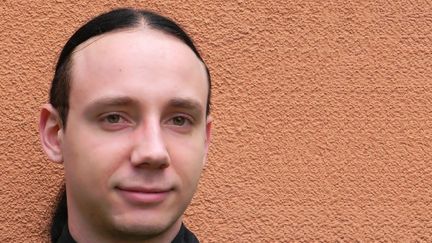
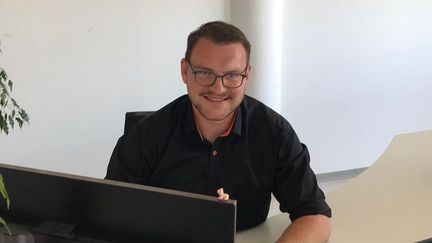
Book an online information session
During the online information sessions, the program directors or academic directors provide detailed information about the program. Topics include course content, internships, admission requirements, and potential career prospects.
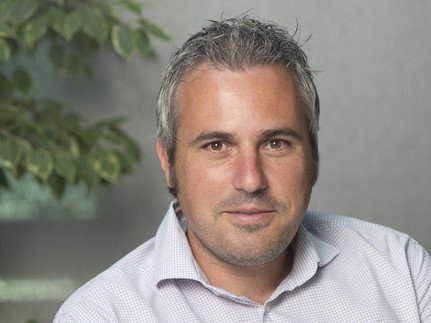
Prof. Günther Grabner, Ph.D., Lecturer at the University of Applied Sciences
Program Director
g.grabner(at)cuas.at
Research and Teaching Facilities
The laboratories at CU Carinthia University provide a modern infrastructure that supports hands-on learning and innovative research. Equipped with state-of-the-art technologies and specialized equipment, they enable students and researchers to work on projects across a wide range of fields, including engineering, computer science, business, and health.
The laboratories are designed to meet current industry standards and requirements, providing an ideal environment for developing new ideas, technologies, and solutions.
INFORMATION & APPLICATION
Virtual Campus Tour
Contact
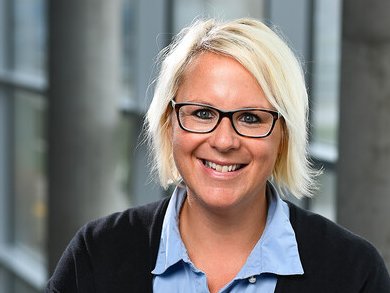
Michaela Filippitsch, M.A.
Administration
+43 5 90500 3101
m.filippitsch(at)cuas.at
On foot
From Klagenfurt Central Station, you can reach the campus in about 20 minutes on foot (1.7 km). The route takes you east along Bahnstraße and then along Gerberweg to the campus.
By public transportation
From Klagenfurt Central Station, take Line A to the “FH Kärnten” stop operated by Stadtwerke Klagenfurt. From the station building, turn left toward the bus station.
By car
Coming from the west—for example, via the A10 Tauern Autobahn or A11 Karawanken Autobahn—take the A2 Südautobahn to the Klagenfurt/Wörthersee exit. Then follow the Südring for about 7 km and turn toward the city center at the Südring/Gerberweg intersection. After about 150 m, turn right toward the campus.
If you’re coming from the east, take the Klagenfurt-Ost exit on the A2 Südautobahn. Then drive toward Klagenfurt-Zentrum, continue along Völkermarkter Straße, and then turn left onto the Südring. At the Südring/Gerberweg intersection, turn toward the city center and, after about 150 m, turn right toward the campus.
Coming from the south, you can reach the campus via the B91 Rosentaler Straße. At the Rosentaler Straße/Südring intersection, turn onto the Südring and follow it for about 2.5 km to the Südring/Gerberweg intersection. There, turn toward the city center and, after about 150 m, turn right toward the campus.
Coming from the north, drive toward the city center on the B83 St. Veiter Straße until you reach the St. Veiter Straße/St. Veiter Ring intersection. Then follow St. Veiter Ring, then Völkermarkter Ring, and continue on Lastenstraße until you reach Gerberweg. After about 750 m, turn left toward the campus.
By Plane
There are several airports in the area to choose from:
- Klagenfurt: approx. 15-minute drive
- Ljubljana (Slovenia): approx. 1 hour 10 minutes by car
- Graz: about 1 hour and 30 minutes by car
- Salzburg: approx. 2 hours and 30 minutes by car
- Trieste and Venice (Italy): approx. 2 to 3 hours’ drive
- Vienna: approx. 3 hours 30 minutes drive
- Munich: approx. 4 hours 15 minutes travel time
The rest of the journey to the Klagenfurt Primoschgasse campus can then be completed by train, bus, taxi, or car.