

MSc in Systems Design
Master's Degree Program
Autonomous robots, smart production facilities, intelligent energy systems, and sustainable mobility are shaping our future. In the English-language master’s degree program in Systems Design, you’ll learn to understand the underlying technologies and successfully develop complex technical systems. You’ll combine electronics, software, sensor technology, data analysis, and artificial intelligence to create innovative solutions for real-world challenges.
Depending on your interests, you’ll specialize in Electronic Systems or Robotic Systems and deepen your expertise in a forward-looking field of technology. Hands-on projects, state-of-the-art labs, and close collaboration with companies will prepare you for demanding roles in development, research, and technical project management.
The Systems Design master’s degree program not only provides you with in-depth technical knowledge of individual technologies but also equips you to think about, develop, and continuously refine complex technical systems in a holistic manner. This qualifies you for positions of responsibility in industry, research, and development.
Balancing Study and Work
The work-friendly program, with just two days of in-person classes per week and a flexible blended-learning approach, allows you to optimally balance your Master’s degree in Systems Design with your career and personal life.
Research Internship
In the third semester, you’ll either work directly in a research group as part of a research internship or deepen your knowledge through selected elective modules. This allows you to gain valuable experience in research and development while you’re still in school.
Applying Artificial Intelligence
In the Systems Design master's program, you will learn to apply artificial intelligence methods to analyze, develop, and continuously optimize complex technical systems.
Ready to help shape the future of intelligent systems?
In the Systems Design master’s program, deepen your expertise in robotics, electronics, and AI, and develop solutions for the challenges of a connected world.
Special features of the program
Practical learning, immediate application
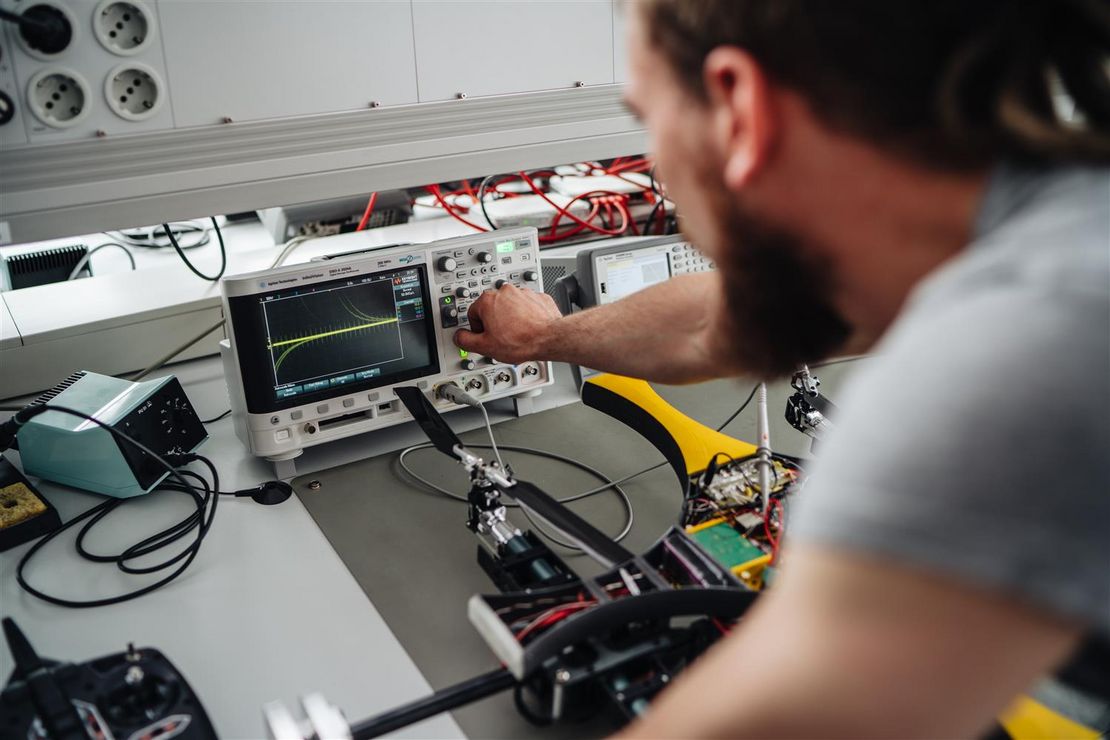
In the Systems Design master's program, you'll tackle real-world technical challenges through projects, lab exercises, and practice-oriented courses. In the process, you'll combine theoretical knowledge with practical experience.
Thinking Interdisciplinary, Designing Systems Holistically
Successful technical innovations arise from the interplay of electronics, software, sensor technology, data, and artificial intelligence. In the Master’s program in Systems Design, you will learn to integrate these technologies and develop complex systems in a holistic manner.
Experience Research
Research and development are an integral part of the Systems Design master’s program. You’ll tackle current issues in the fields of robotics, electronics, and sustainable mobility, and learn how to translate new technologies into practical system solutions.
A particular highlight is the research internship in the third semester. During this internship, you’ll work directly within a research group or take selected elective modules. This allows you to combine scientific methods with real-world development and research tasks and gain valuable experience for your future career in research or industry.
Further Information
- ADMiRE and myLAB Research Groups
- Research Groups & Research Projects
Networking with Companies
Through close collaboration with industry partners, you’ll gain insights into the latest technologies and areas of application. At the same time, the Master’s program in Systems Design will help you build valuable professional connections for your future career.
Master's Thesis in Collaboration with a Company
Many Systems Design students write their master’s thesis in collaboration with a company. This allows you to tackle real-world problems, deepen your expertise in current technologies, and build valuable professional connections for your future career. It’s not uncommon for this to lead to exciting career opportunities or a direct entry into positions of responsibility.
Details about the program




Info Box
Level of qualification
Master
ECTS credits
120
Tuition fees*
€ 363.36 / Semester
ÖH (Austrian Student Union) fee
€ 26.20 / Semester
Qualification awarded
Master of Science in Engineering
Duration of study
4 Semester
Language of instruction
English
CU Campus
Villach
Dates Info Box
Winterterm 2026
Period I: 01.11.-15.03.26
Period II: 16.03.-15.05.26
Period III: 16.05.-15.07.26
Period IV: 16.07.-30.09.26*
Due to lengthy visa processes, applications from Africa, the Middle East and South, East, and Southeast Asia only in Period I.
*We reserve the right not to open the period or to close it early.
The semester starts in October - we only offer intake in winterterm!
The start of lectures can be found in the individual timetable which is available after enrollment.
Tuesday, Thursday and Saturday full-time from 08:30 h
Classroom teaching with online parts
An overview on our upcoming events can be found here.
You are interested in a personal (online) study consultation or would like to receive more information on the degree program? Click on the buttons below this checkbox to learn more.
Language of Instruction: English (min B2)
Application essentials:
More information on the application process, admission requirements and necessary documents can be found here.
* Tuition for non-EU/EEA citizens: €500 + €26.20 ÖH fee (per semester)
FAQ
Frequently asked questions about the
“Systems Design” Master’s Degree Program
Is Systems Design right for me?
Yes, if you want to develop complex technical systems. The master’s program in Systems Design is designed for people with an interest in technology who want to combine robotics, electronics, software, and artificial intelligence to develop networked solutions for the future.
What bachelor's degree do I need to get started?
The Master's in Systems Design is designed for graduates of technical bachelor's degree programs. Whether your prior education meets the academic admission requirements will be assessed on a case-by-case basis as part of the admissions process.
What career opportunities does this degree program offer?
After completing the master’s degree program in Systems Design, you could work in fields such as robotics, automation, microelectronics, mechatronics, communications and computer engineering, or mechanical and plant engineering. Research and development also offer a wide range of career opportunities.
Versatile - "The solid foundational training in electrical engineering, along with the great support from my team, really helped me get up to speed quickly in my role. A degree in engineering makes you very versatile."
Excellent Organization - “The curriculum included everything I had hoped for. The set class schedules and fixed exam dates made student life a lot easier. The organization of the Master’s program in Systems Design was also excellent.”
Book an online information session
During the online information sessions, the program directors or academic directors provide detailed information about the program. Topics include course content, internships, admission requirements, and potential career prospects.
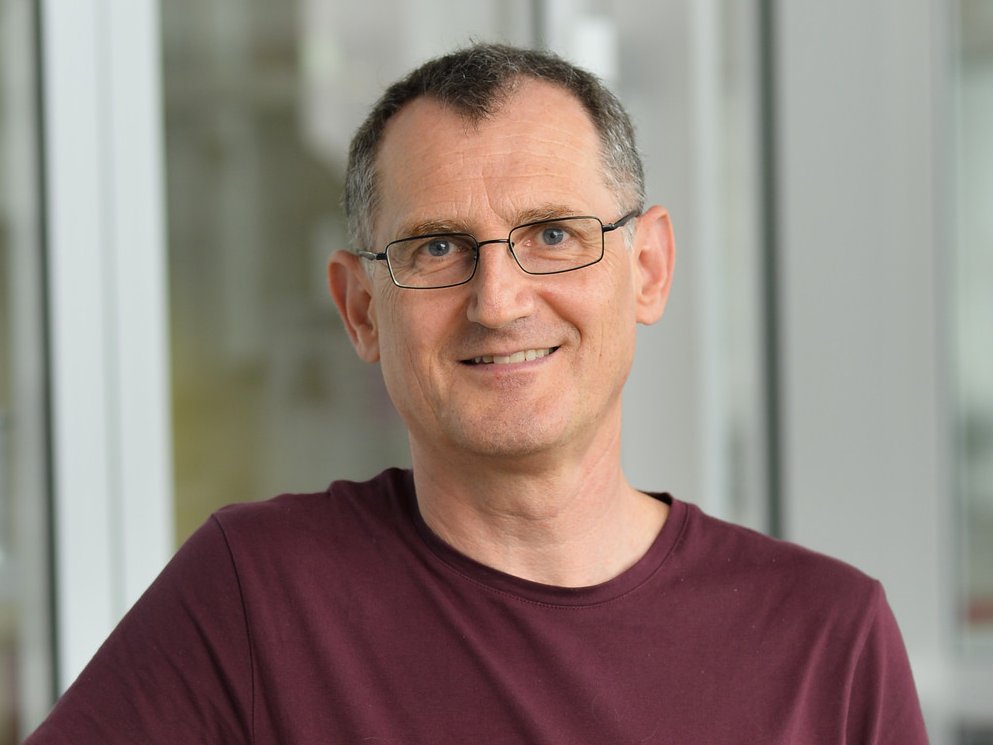
Prof. Wolfgang Werth, Dipl.-Ing.
, Ph.D.
Program Director for Systems Engineering, Systems Design, and Industrial Power Electronics
w.werth(at)cuas.at
Research and Teaching Facilities
The laboratories at CU Carinthia University provide a modern infrastructure that supports hands-on learning and innovative research. Equipped with state-of-the-art technologies and specialized equipment, they enable students and researchers to work on projects across a wide range of fields, including engineering, computer science, business, and health.
The laboratories are designed to meet current industry standards and requirements, providing an ideal environment for developing new ideas, technologies, and solutions.
INFORMATION & APPLICATION
Virtual Campus Tour
Contact
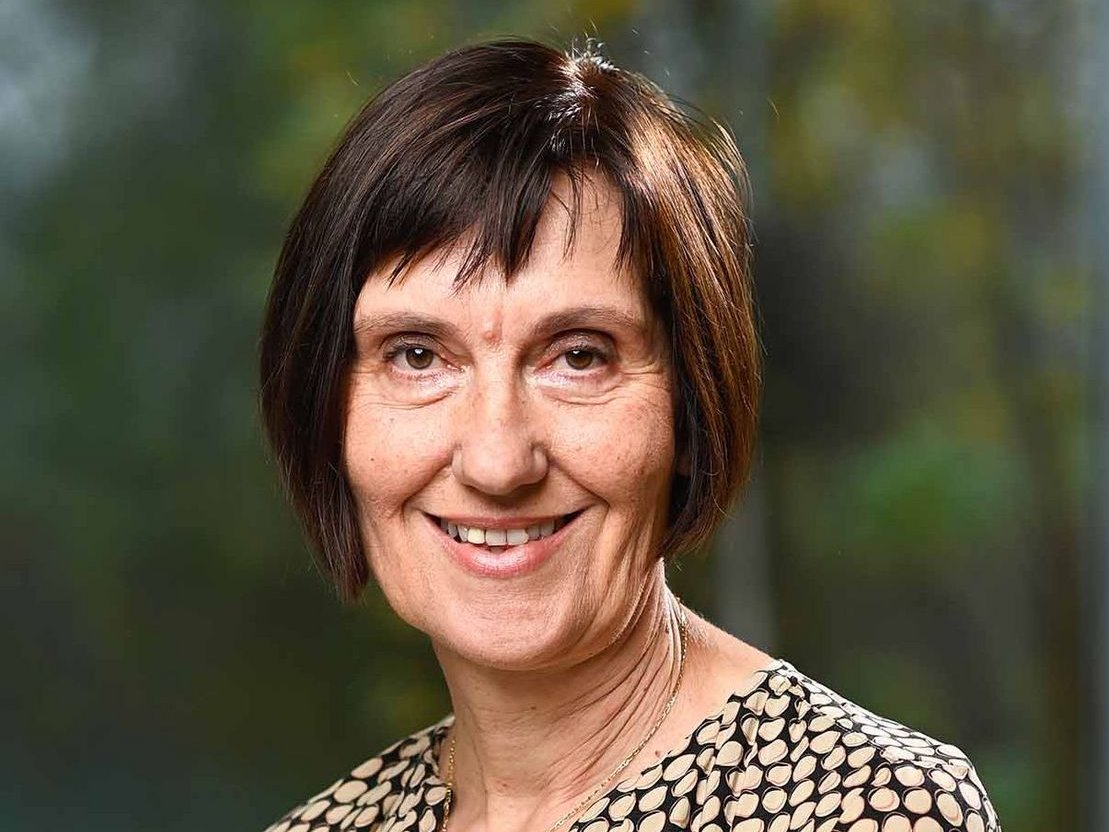
Elizabeth Maggauer-Hoffmann, M.A.
Administration
+43 5 90500 2003
e.maggauer-hoffmann(at)cuas.at
On foot
From the Villach Seebach train station, you can reach the campus in about 20 minutes on foot (1.6 km). The route follows the Drau River to the campus.
By public transportation
The campus is directly accessible from Villach Central Station via bus lines 3 and 8 to the “Technologiepark” stop. From the Villach Seebach train station, you can also reach the campus by taking bus line 8 to the “Technologiepark” stop. The Villach city bus schedules are coordinated with the ÖBB schedules.
By car
Coming from Klagenfurt/Vienna, take the A2 Südautobahn to the Wernberg exit. From there, follow the B83 Kärntner Straße toward Villach for about 2 km, then follow the signs toward Magdalenen See or Technologiepark.
Coming from Salzburg/Munich via the A10 Tauern Autobahn, take the Villach/Ossiacher See exit and follow the B33 Kärntner Straße for about 2 km toward Wernberg/Klagenfurt. Then turn toward Magdalenen See and follow the road to the Technology Park.
There are several free parking spaces right in front of the building, and additional paid parking spaces are available in the surrounding area.
By Plane
There are several airports in the area:
- Klagenfurt: approx. 30-minute drive
- Ljubljana (Slovenia): approx. 1-hour drive
- Graz: approx. 2-hour drive
- Salzburg: approx. 2-hour drive
- Trieste and Venice (Italy): about 2 to 3 hours by car
- Vienna: about a 4-hour drive
- Munich: approx. 4-hour drive
From there, you can continue your journey to the Villach campus by train, bus, taxi, or car.